Imprisoned Gods
Lukah Katangila / Ultima Vez
Want to know more?
After the performance, there will be a conversation with creator Lukah Katangila about Imprisoned Gods, his inspiration and the creative process. Feel free to join us and discover more about Lukah’s story behind the performance.
The conversation will take place in English.
In Imprisoned Gods (MIUNGU GEREZANI), Lukah delves into ancestral African beliefs, focusing on the peoples of Alkebulan, the ancient name for the continent. Communities like the Weusi possessed a rich spiritual culture and a deep understanding of nature. However, the arrival of colonizers and Christianity, with its emphasis on a single god, disrupted these beliefs, creating a dichotomy of good and evil and resulting in the erosion of traditional practices.
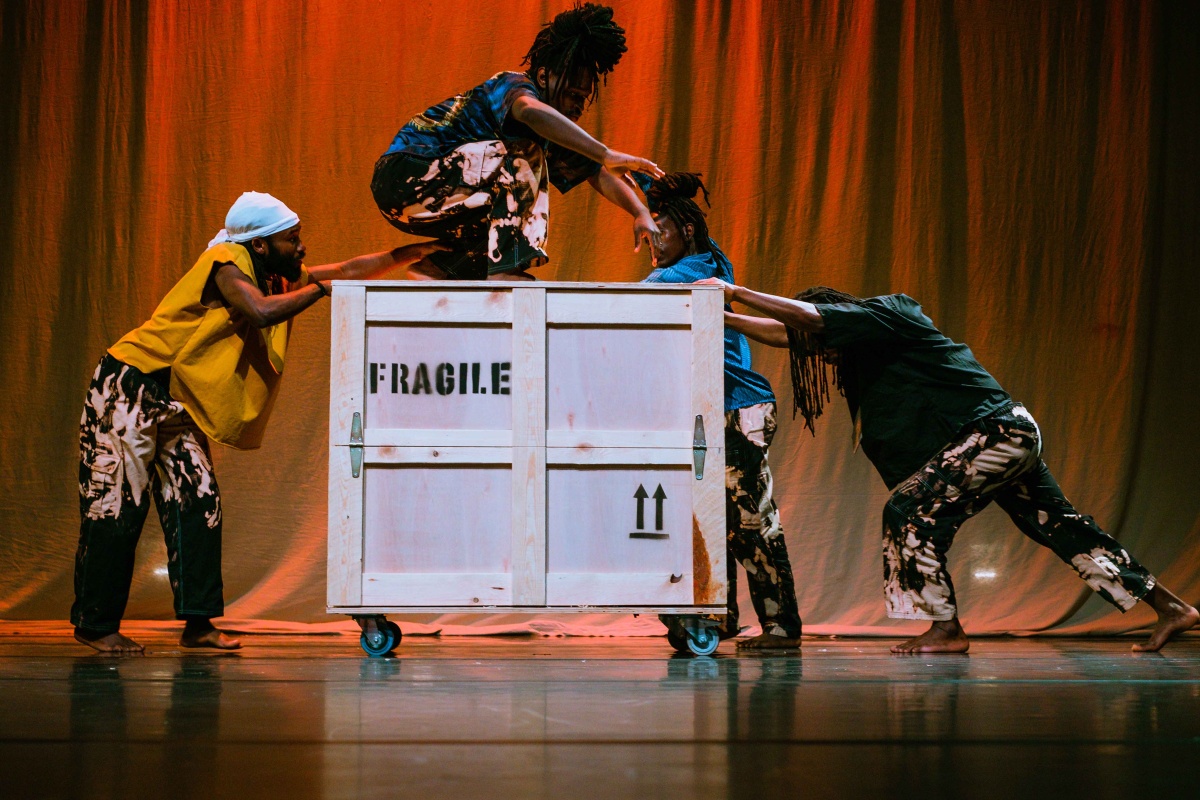
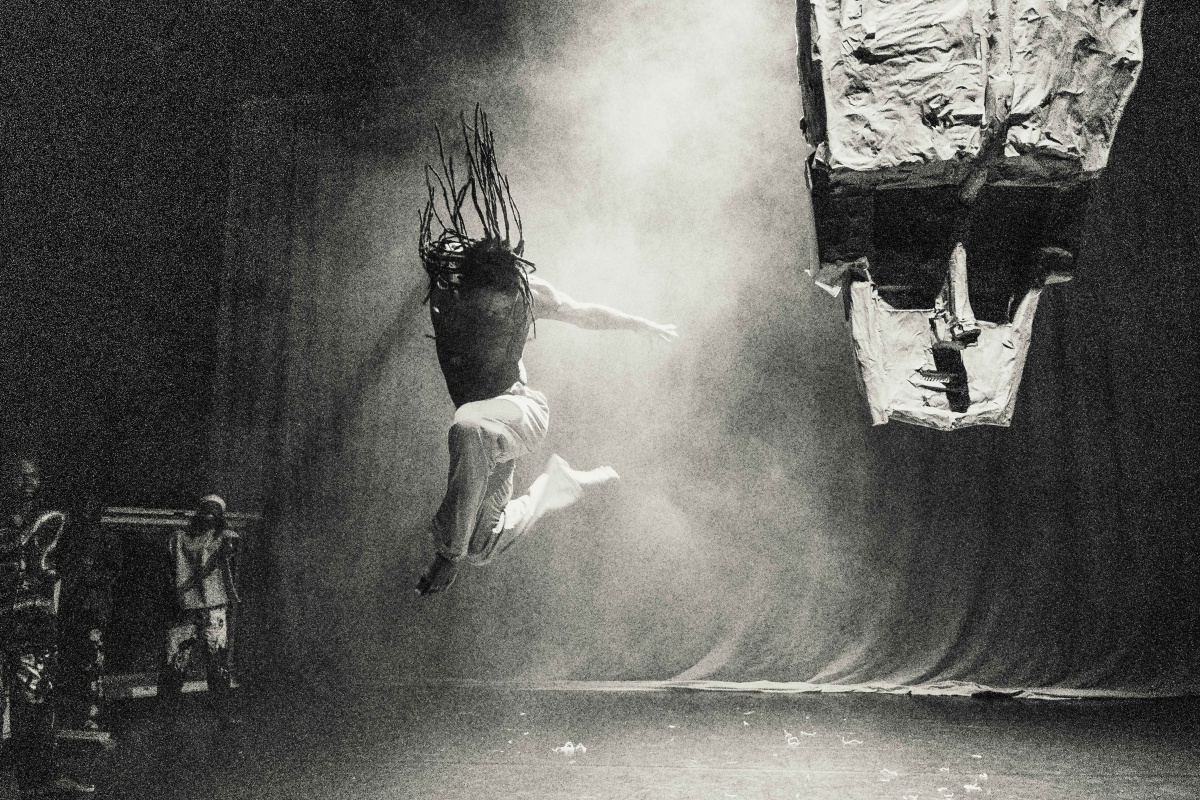
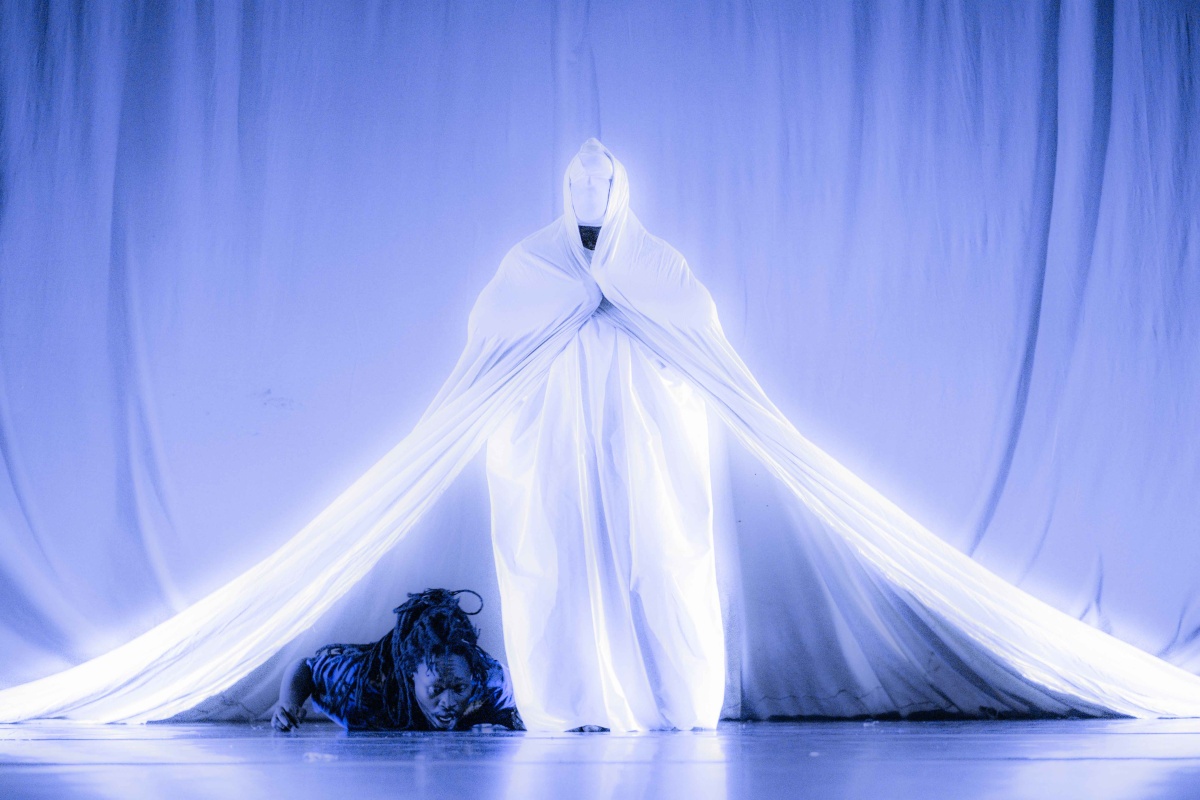
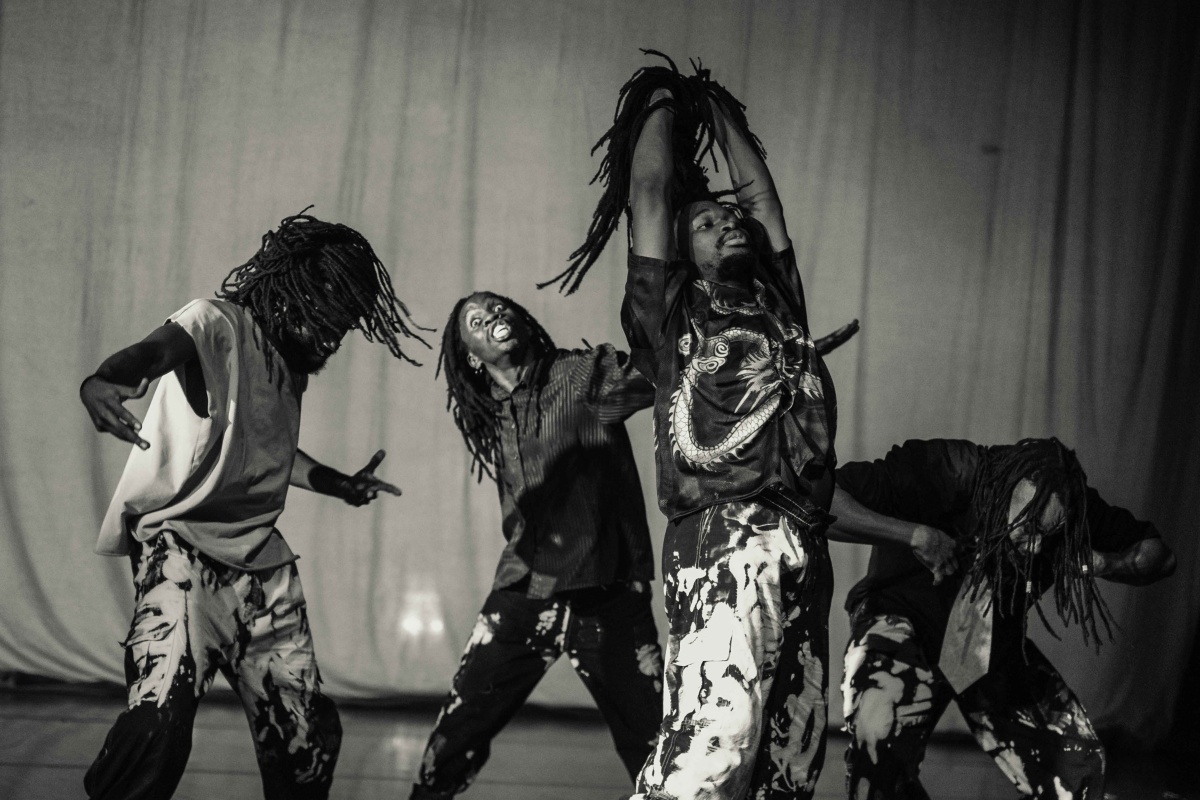
The piece is inspired by the song Nakomitunaka by Kiamwangana Verckys, questioning the religious narratives imposed on African populations. African statues and masks, confiscated and displayed in Western museums, are liberated and embodied in this work, while biblical verses and crosses coexist with African traditions. The dancers, hailing from Goma, each bring a distinct style (Rega, Tembo, Shi, Hunde), enriching Lukah’s choreography influenced by these traditional forms. Many statues and cult objects were taken from Congo to Belgium, exhibited as curiosities in museums. As Lukah notes, “The gods have been imprisoned.”
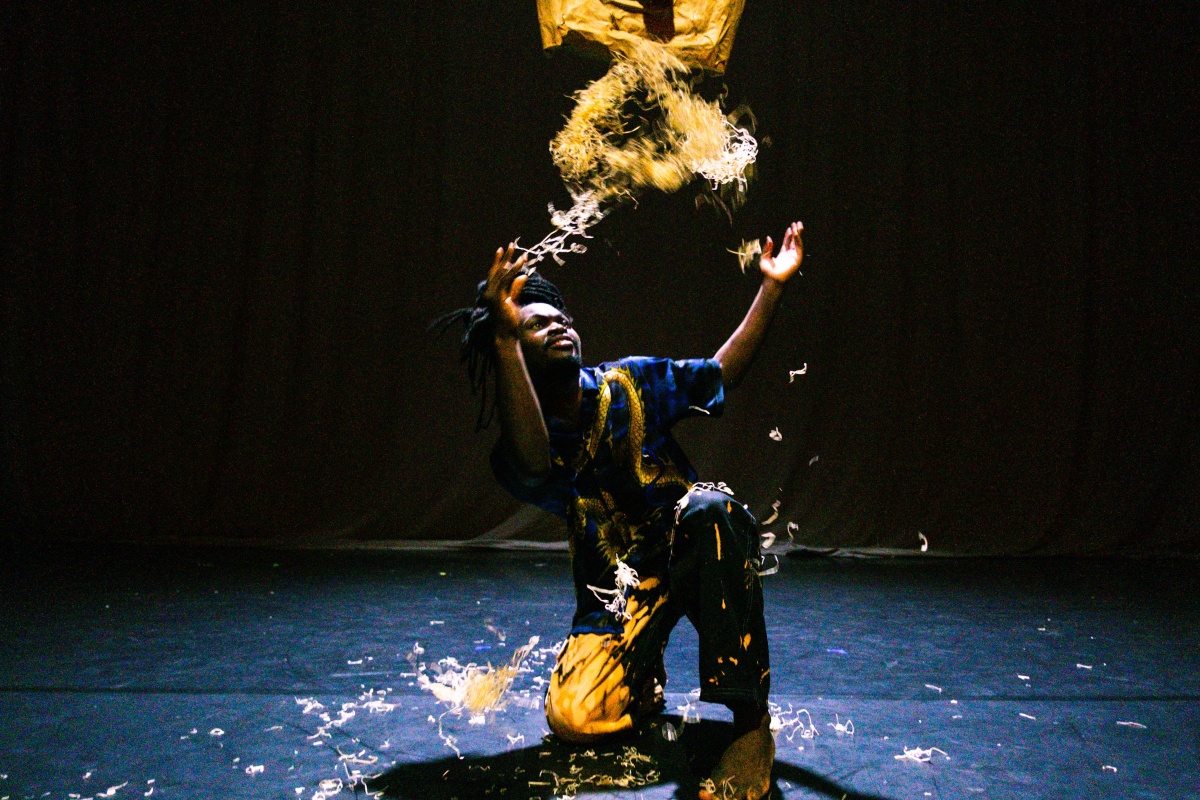
This performance examines the tensions between these two worlds of belief, their meanings, and their contemporary impacts. The statues and masks of the gods, confined in museums, are freed and embodied. The costumes, inspired by the minganji in raffia, symbolize the transmission of power. Masks created by Precy Numbi and visual projections related to Christianity emphasize the tensions between these belief systems. The music, focused on percussion, reinforces this duality and highlights the strength of African traditions in the face of colonial heritage.
“My God, I wonder Where does the black man come from? Jesus, the son of God, is white Adam and Eve are white ... We believe in their white prophets but they refuse to believe in our prophets ...” (translated from Lingala)
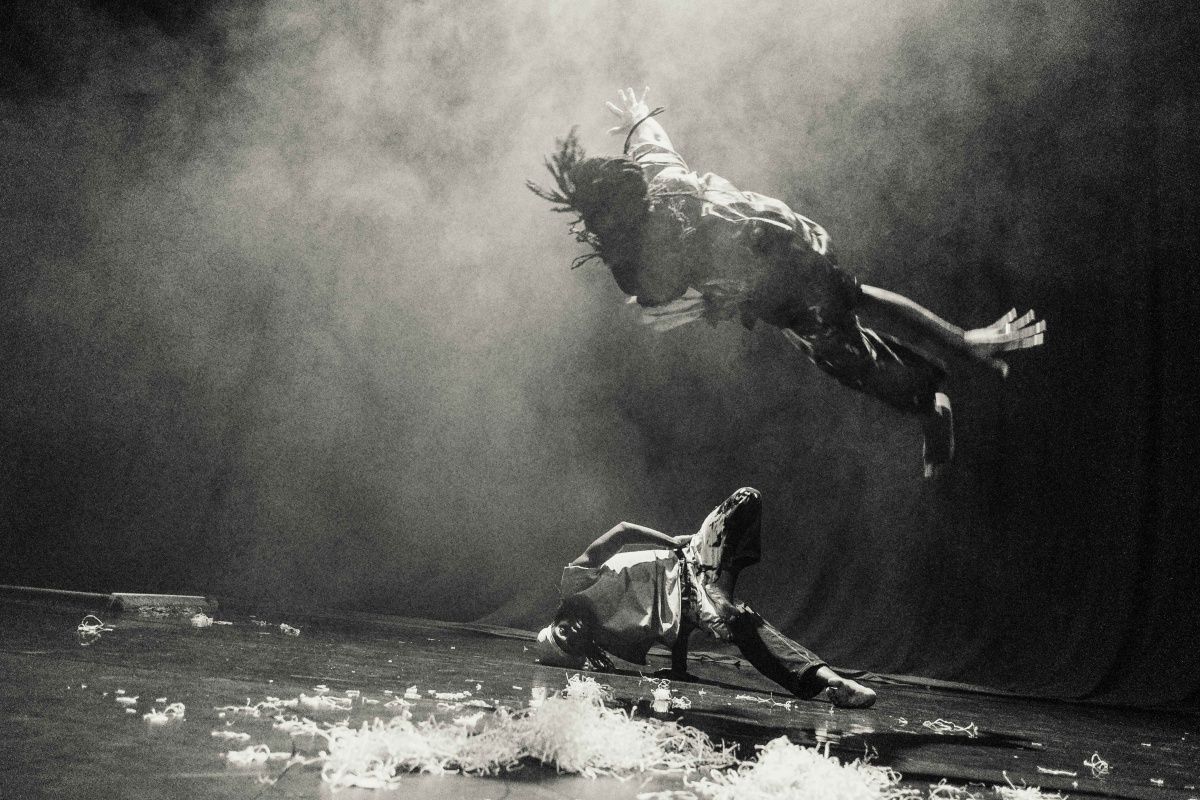
Although the dance relies on traditional forms, the goal is not to imitate them but to use them as a frame of reference influencing Lukah’s formal language and choreography. In this context, hip-hop serves as a connection among the dancers. Together, they will explore the essence of their personal history, shape it, and experiment with it, while inviting the audience into a world of movement, where perspectives evolve and dogmas fade.
Gallery
Already ended
- - KVS BOL