Who seeks, who finds

Ceci n'est pas Noire: act II


EVENING PROGRAMME

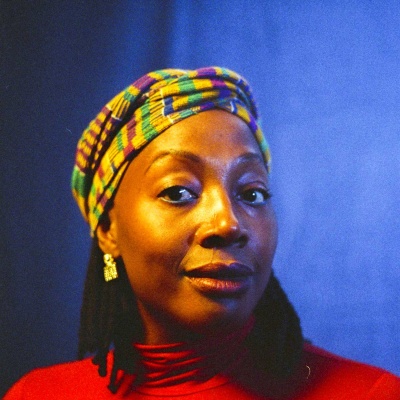
Alesandra Seutin presents Ceci n’est pas Noire: Act II, a performance that understands the body as a site of echo and cultural resonance, where conceptions of identity and belonging are constantly transformed. 

Immersive in nature, the work reflects on Alesandra’s experience of being of both white European and Black Southern African heritage, a constant negotiation between intimacy and exposure, vulnerability and projection, Ceci n’est pas Noire: Act II is about embracing inner tensions in the discovery of one’s own truth. 

Between surreal visions and hybrid narrative forms the piece unfolds through an episodic structure, punctuated by multiple figures embodied effortlessly through Seutin’s movement vocabulary. Gestures, vocals and live sounds intertwine to awaken memories, traverse geographical and personal landscapes, and reveal the layered complexity of a hybrid identity. 

In Ceci n’est pas Noire: Act II, Seutin explores anew her earlier 2013 work of the same name. She deftly interweaves character devices to explore themes of the external gaze, transformation and assumed social roles, questioning how appearances can be fluid and deceptive. 

An intimate but frontal journey, Ceci n’est pas Noire: Act II invites audiences to consider the body as a space of memory, imagination, vulnerability and, ultimately, strength.


In the studio with Alesandra Seutin


A Concert on the Balcony, Dancing on the Floor: Ceci n'est pas noire: Act II and Dramaturgy

When Alesandra Seutin told me she was making Ceci n’est pas noire: Act 2, I was delighted. I had been the dramaturg on the original Ceci n’est pas noire in 2013, in which she explored her Africanness and confronted society’s perceptions of what a Brown woman should be. Now, as the daughter of a white Belgian father and a Black South African mother, she turns in Act 2 to her white Belgian ancestry. A dramaturg acts as a thinking partner and outside eye for the artist and creative team. Working on this piece, I have been drawn to the power of personal history to open up wider social and political questions. As the feminist saying goes, the personal is political. Stories of growing up, of searching for purpose, of travel and return, of confronting the past and taking up space in the present, are human stories, and through them we find routes into wider social histories, and metaphors that illuminate political issues and social realities. In Alesandra’s story, I see histories collide within a single family, and a single body. Our aim has not been to demonstrate fusion, but to create an image of how living requires synthesis, with movement, music, sound and design resonating and carrying meaning together.

As dramaturgs usually do, I contributed to the research for the piece and worked with Alesandra and the creative team to gather shared reference points from history and popular culture. But this has also been a physical dramaturgy, which has meant dancing in the space and working with Alesandra on modes and methods for investigating how the body can perform a transnational social reality which is nevertheless rooted in specific places and cultures. Verena Rizzo, a multi-instrumentalist, shares the stage with Alesandra, who was emphatic that she should not be seen as an accompanist but a performer in her own right. Part of the dramaturgy has been watching Verena's own persona emerge. For me, this has been a process of deep listening: to the proposals of Gerardo Salinas, dramaturg at KVS; to the conversations between the musician, the sound designer, music dramaturg, rehearsal associates and production team. We bounce off each other's ideas well, and Alesandra holds the artistic direction firmly and generously. That has been a real joy.

Alesandra is a dancer and choreographer, but she works across disciplines: she trained in visual art and has performed as a singer so her storytelling takes a multi-layered form.  Besides, personal history, Belgian popular culture, (I discovered, for one, that songs I had heard for years were written by Jacques Brel.), Belgian surrealism, is a fertile soil. I found it has some differences from its French counterpart. It engages with the everyday and the domestic and does so in political ways. The women surrealists, Rachel Baes and Jane Graverol among them, particularly caught my attention. The title of the production itself riffs on one of Belgian surrealism's most famous works, René Magritte's Ceci n'est pas une pipe: a painting of a pipe that insists it is not a pipe, reminding us that an image is never simply the thing it shows.

Alesandra loves to converse with her audience. In the first show she played a guessing game: she placed a card on her forehead bearing a word (God, the Queen, Beyoncé) and asked the audience questions they could only answer with yes or no. Then came the question "Am I Black?", and the audience shouted back their answers. This time she has created a ‘concert balcony’, from which she addresses the audience through a series of transformations, musical genres and poetry, with the kinds of chants you hear at concerts: Can you hear me, Belgium?! The ‘concert balcony’ teems with lines with double meaning, catchy tunes, movements to move you, vocals that make for easy and uneasy listening. Behind the balcony, the floor is marked out to suggest multi-dimensional spaces. These markings emerged from an improvisation method Alesandra uses with her dance practice. Much of our discussion in the rehearsal room has been about how the images, symbols, memories and histories held in that floor can be brought into performance. Through dance, Alesandra shifts between personas, from a shimmering pop princess to an unsavoury, predatory figure, from different eras, moving between childhood and her present as a woman in her forties. Photographs of her family, her mother and father appear in the scenography, alongside echoes of iconic music. I have been intrigued by the tension between the balcony and the floor behind it. It can be read as a meeting place between the seen and the unseen, but there are other layers to it. I envisage an immersive experience offering various ways for the audience to connect. At a time when there are wars, social unrest and neo-colonial oppression in many parts of the world, I believe we need to remember what we share: a common, deeply human desire for a good and meaningful life. There is a need to reflect on what living together peacefully and equitably truly asks of us. Ceci n’est pas noire: Act 2 works as Magritte’s painting does. You see the work of a Brown woman, and you come to understand that the world cannot so easily be divided into black and white.

by FUNMI ADEWOLE ELLIOTT, dramaturg

Historical and Cultural Glossary for the Programme

The words, names and cultural references that run through Ceci n’est pas noire belong to different geographies, periods and collective imaginaries. Some evoke family histories; others refer to colonialism, popular culture, national identities or the ways in which societies represent those they perceive as different. This glossary offers a few keys to understanding these references and the histories they carry.

Métis / Mulâtre

French terms historically used to describe people considered to be of mixed racial ancestry. Mulâtre, etymologically linked to mule, is now generally considered offensive, while métis remains in use, including as a form of self-identification. Under Belgian colonial rule in Central Africa, children born to European fathers and African mothers faced institutional discrimination, including forced separation from their families. In 2019, the Belgian government formally apologised for this historical injustice.

Motherland / Fatherland

Expressions that associate territory with origins, ancestry and belonging. In Ceci n’est pas noire, Rhodesia/Zimbabwe is associated with the mother, and Belgium with the father. These family geographies also contain histories of colonisation, migration and conflict. Belonging thus becomes more than a question of nationality: it is an intimate and inherited experience, shaped by family relationships as well as by the histories of the territories involved.

Rhodesia / Zimbabwe

Rhodesia was the colonial name of a territory in Southern Africa, named after the British imperialist Cecil Rhodes. In 1965, Southern Rhodesia’s white-minority government unilaterally declared independence to preserve a system of racial domination. Following years of armed struggle and negotiations, the country gained internationally recognised independence in 1980 and adopted the name Zimbabwe. The change of name also represented a political and symbolic transformation.

Gaume

A historical and cultural region in the far south of Belgium, in the province of Luxembourg, close to the French border. It is distinguished by its local traditions and by Gaumais, a regional variety of the Lorrain language. Its cultural identity forms part of Belgium’s linguistic diversity. In the performance, the reference to Gaume introduces a specific European belonging, rooted in family and territory, far removed from the more familiar images of Belgium.

Shona / Zulu / Nguni

Shona and Zulu are Bantu languages spoken mainly in Zimbabwe and South Africa, respectively. Nguni refers to a group of Southern African languages that includes Zulu, Xhosa, Swati and Ndebele. These languages carry histories, knowledge and forms of belonging that predate colonial borders. During colonisation, English acquired a dominant position in many institutions, transforming the power relationships between European and African languages.

Leonidas / Godiva

Two historic Belgian chocolate brands, internationally associated with the country’s chocolate-making tradition. Leonidas was founded in 1913 and Godiva in 1926. Their presence in the performance connects an emblematic image of Belgium with food-related metaphors used to describe skin colour. These seemingly innocent or affectionate associations can reduce a person’s identity to their physical appearance, turning racial difference into an object of consumption.

Pierre Nolf

(1873–1953). Belgian physician, professor and politician who served as Minister of Arts and Sciences. In 1930, he delivered a speech addressing racial mixing, drawing on contemporary theories of heredity to argue against marriages between Black and white people. His statements illustrate how scientific authority was used to legitimise colonial racism and racial hierarchies. Today, they reveal the historical foundations of prejudices surrounding mixed-race identities in Belgium.

Cecil Rhodes

(1853–1902). British businessman, politician and imperialist who played a decisive role in the expansion of British colonial power in Southern Africa. Rhodesia was named after him. He openly defended British supremacy and was involved in processes of land appropriation and economic exploitation. His legacy remains controversial, particularly in debates about colonialism, historical memory and the decolonisation of educational and cultural institutions.

Ancestors

In many African traditions, ancestors remain active presences within the lives of their descendants. The Kenyan philosopher John Mbiti described them as the “living-dead”: those who continue to belong to the community through memory and relationships. Ancestral presence also takes different forms in European traditions, from religious remembrance to family rituals and inherited stories. In Ceci n’est pas noire, ancestors evoke the histories, memories and relationships that continue to inhabit the living body.

Bamboula

The term originally comes from West African and Bantu-Congo languages referring to a traditional cylindrical drum or membrane-stretched percussion instrument. During the colonial period, it acquired stereotypical meanings and came to be used as a derogatory term for Black people. Today, it is considered a racist slur. Its persistence in everyday language reveals how certain words can preserve and reproduce colonial imaginaries, even when those using them claim they are merely jokes or harmless expressions.

Annie Cordy / Chaud cacao

Annie Cordy (1928–2020) was a Belgian singer and actress, and a popular figure in French-speaking entertainment. Her song Chaud cacao, released in 1985, became a festive hit associated with her humorous public persona. The song draws on a tropical, African-inspired imaginary that can be examined critically today. Its presence evokes the ways in which European popular culture has turned certain representations of Africa and Blackness into entertainment.

“Pendant 80 ans la Belgique a envoyé sur votre sol les meilleurs de ses fils”

A phrase from the speech delivered by King Baudouin of Belgium on 30 June 1960, during the ceremony marking the independence of the Congo. In his address, Baudouin presented Belgian colonial rule as a civilising mission, praising the contributions of Belgian colonisers while overlooking the violence, exploitation and oppression experienced by the Congolese population. 

Settler Colonialism

A form of colonisation characterised by the permanent settlement of populations originating from a colonising power. Unlike colonial systems primarily focused on extracting resources, settler colonialism also seeks to control territory and reorganise society for the benefit of settlers, displacing or subordinating Indigenous populations. Rhodesia was an example of this system, in which a white minority concentrated political, economic and territorial power for decades.

Gilles de Binche

Traditional figures of the Carnival of Binche in Belgium, a celebration recognised by UNESCO as Intangible Cultural Heritage of Humanity.The Gilles wear elaborate costumes, wax masks and, on certain occasions, large hats decorated with ostrich feathers also traditional wooden clogs as seen in this work. Accompanied by drums, they take part in collective rituals that form part of local cultural identity. They are among the most recognisable symbols of Belgian folklore and popular traditions.

The White Gaze

A concept describing how racialised people are observed, interpreted or represented from a perspective that treats whiteness as the norm. This gaze can turn a person into an object of curiosity, suspicion, desire or constant evaluation. Thinkers such as W. E. B. Du Bois and Frantz Fanon explored experiences related to this condition: being compelled to see oneself through the perceptions and expectations imposed by others.

Racial Hypersexualisation

The process through which sexual characteristics, behaviours or availability are attributed to a person on the basis of racial stereotypes. Historically, Black women have often been represented in colonial imaginaries as exotic, excessively sexual or available to male desire. These representations can manifest themselves through comments, gestures, harassment and various forms of violence. Racial hypersexualisation combines racial and gender discrimination, reducing a person to their body.

Joséphine Baker

(1906–1975). African American dancer, singer and actress who rose to fame in Paris during the 1920s. Her career was marked by the tension between the exoticisation of her Black body and her ability to transform that visibility into artistic autonomy. She participated in the French Resistance during the Second World War and later became involved in the civil rights movement. Her life and work bring together questions of representation, emancipation, identity and cultural power.

Sjambok

A heavy whip traditionally made from animal hide, particularly rhinoceros or hippopotamus skin, and later from synthetic materials. Used in Southern Africa for herding animals, it also became an instrument of corporal punishment, intimidation and repression. During apartheid in South Africa, sjamboks were notoriously associated with police violence against Black protesters. The object carries a history of colonial domination, racial violence and the use of physical force to enforce authority.


Credits

Choreography, performance & text Alesandra Seutin – BE Musician & performer Verena Rizzo – IT/BE Writing coaching Sefora 'Sesa' Sam – BE Set & light designStef Stessel – BE Costume design Caroline Fainke – BE Dramaturgy Funmi Adewole – UK & Gerardo Salinas – BE Musical Dramaturgy Jan Wallyn – BE Rehearsal associates Wanjiru Kamuyu – FR & Nandi Bhebhe – UK Outside Eye Kopano Maroga – SA & Sophie De Vries – NL/BE Mediation Aurelie 'ARU' Disasi – BE Production & surtitling Inge Floré – BE Light technician Margareta Andersen – BE Sound design Patrick Van Neck – BE Stage manager Lieven Symaeys – BE Additional production support for Alesandra Seutin Uprise Rebel (Georgia Gerson & Grace Okereke) – UK Production KVS With the support of the Belgian Federal Government’s Tax Shelter measure