


Hannibal Evening Programme
Directors Junior Mthombeni and Michael De Cock unite a mega-cast bursting with talent and contemporary music producers to give Dido and Aeneas by Baroque composer Henry Purcell a bold new twist. Grand, generous, and groundbreaking.
Classical live musicians and artists reinterpret Purcell. Together, they tell the story of Hannibal, the Punic Wars, and the origins of Europe. In the third century BC, the Carthaginian general Hannibal Barca began his dizzying journey: he marched with his troops through Spain, France, and Italy, on a quest to shake the Roman Empire to its core. Hannibal ad portas!
The Punic Wars serve as a metaphor for all the wars being fought today in this ever-changing, fear-inducing world. Hannibal offers a lens through which we explore the confrontation between old and new. Traditional European culture is, according to some, under pressure from a hyper-diverse Europe. The idea that barbarians are once again at the gates, ready to erase European history, seems—however absurd—unfortunately to be resurfacing. Hannibal therefore opens, through a unique synergy of opera and slam, contemporary dance and acting, a window into the past, present, and future of Europe. The creators take as their starting point the opera Dido and Aeneas, in which the mythical origin of the conflict between Europe and North Africa sets the stage.
In Hannibal, artists from Africa and Europe intertwine contemporary video and projection techniques with traditional live painting and acoustic instruments. Brought to life by many, with one heartbeat. Featuring mezzo-soprano Raphaële Green, singer Gala Dragot, harpist Jutta Troch, actors Marios Bellas and Alix Konadu, dancer Zach Swagga, visual artist Elke Gijsemans, Justine Bourgeus (Tsar B), Abel Baeck (NO LABEL), and many others. Several artists are part of the SOCHA collective, founded by Junior Mthombeni and Gerardo Salinas.

Hannibal: Who, Where, and When?
Hannibal Barca was born in 247 BC in Carthage, a city-state located in present-day Tunisia. The city was founded by Queen Elissa, known in Latin as Dido. Dido came from Tyre, a city in modern-day Lebanon.
Hannibal’s native language was Phoenician, spoken by the Phoenicians, a people originally from the region around present-day Lebanon who migrated to Carthage. The Romans referred to them as the Punics. They spoke of the Punic language and would call the wars initiated from Carthage the Punic Wars.
At a young age, Hannibal migrated to Carthagena, a city along the Spanish coast, where the foundation for his unshakeable character and military strategy was laid.
Hannibal’s father was Hamilcar Barca, commander of the Carthaginian army during the First Punic War. Hamilcar died during a campaign in Spain when Hannibal was only 18 years old. Although tradition dictated that the eldest son should succeed the father, Hannibal was still too young to command the army. His brother-in-law, Hasdrubal the Fair, took over leadership of the army until Hannibal was of age. Eventually, at 26 years old, Hannibal became the commander of the Punic army and would lead the Second Punic War.
The Punic Wars were fought between the cities of Carthage in North Africa and Rome in Northern Italy for dominance in the Mediterranean region. The second war arose directly from the first. After his father’s death, Hannibal took command of the troops and led them to several victories, coming close to the gates of Rome. The expedition toward Rome began from Cartagena, crossing the Alps. Hannibal was around 29 years old at the time.
The Second Punic War began over a dispute about the city of Saguntum in Spain. Although the city technically fell under Carthaginian control, the Romans had formed an alliance with Saguntum. In Carthage, the peaceful leaders lost their influence, and Hannibal was granted permission to act against Rome. In 219 BC, Hannibal laid siege to Saguntum. When the city called for help, the Romans demanded that Carthage halt the attack, but Carthage refused. Only after the conquest of Saguntum did Rome declare war on Carthage, prompting Hannibal to begin his campaign in Italy to defeat the Romans in their own territory.
Setting out from Spain with a mercenary army and 37 elephants, Hannibal achieved major military successes in Italy—first near Lake Trasimene and soon after at the Battle of Cannae. Despite his resounding victory at Cannae, no peace treaty was signed with Rome. Was it due to Hannibal’s insatiable ambition? Or perhaps his unreliable mercenary forces?
After the bloody Battle of Cannae, Hannibal hesitated to march directly on Rome. He fell into a kind of paralyzing doubt, while his soldiers were exhausted. Eventually, Hannibal returned to Carthage, where he received no further military support. Rome, on the other hand, continued to deploy new, well-trained soldiers with solid equipment. Scipio Africanus would eventually defeat Hannibal at the Battle of Zama, near Carthage. Scipio Africanus was Hannibal’s equal and opposite: a military genius as well, but shaped by the rigid hierarchy and discipline of the Roman army. Calculating and proud, he ultimately forced Hannibal and Carthage to their knees.
After the defeat at Zama, Hannibal returned to Carthage, but still received no support from his city. Rome, however, kept sending trained soldiers, making it impossible for Hannibal to continue his fight. To escape the Romans, Hannibal fled into exile in the region of present-day Turkey. Despite his remarkable strategic abilities, he was constantly on the run and forced to live in hiding.
In the final years of his life, Hannibal faced the growing threat of capture by the Romans. Choosing death over surrender, he took poison from a cup.

The Story of Dido and Aeneas
(And how Hannibal fits into it)
According to legend, Dido is considered the founder of Carthage after fleeing from Tyre. The male leaders received her in a condescending manner, offering her only as much land as could be covered by a bull’s hide. But Dido was clever. She spent the entire night cutting the hide into nearly invisible strips, which she then stitched together. In this way, she patiently and persistently wove the boundary of her city, Qart-ḥadašt or Carthage ("New City"). Carthage quickly gained importance as a trading post.
Although this legend attributes an important role to her in the founding of Carthage, there is little historical evidence to confirm her existence. Many historians consider her story largely mythical, likely amplified by later writers to dramatize the history of Carthage and its rivalry with Rome.
The myth is further elaborated in Virgil’s epic The Aeneid, in which Dido falls in love with the Trojan hero Aeneas. Aeneas, a valiant refugee from the ruined city of Troy, escapes its total destruction and, after a long and perilous journey, arrives in Carthage. When Aeneas leaves Carthage to fulfill his divine mission of founding Rome, Dido is so devastated by grief that she takes her own life. The queen curses Aeneas and foretells that his descendants will wage war against Carthage for years to come. This myth was used to explain the enmity between Carthage and Rome and served as a literary justification for Roman dominance over Carthage.
Dido’s broken heart foreshadows the Punic Wars between Carthage and Rome—thus heralding the arrival of… Hannibal.

Opera by Henry Purcell
Henry Purcell (1659–1695) is considered England’s greatest composer. He was born in the heart of London (Westminster). As a teenager, he served as a choirboy, and later worked as an organist and composer at Westminster Abbey and the Chapel Royal. Purcell composed a great deal of church music, including anthems, but also music for the theatre, odes for notable figures, and instrumental works.
Purcell was around twenty-five years old when he wrote the opera Dido and Aeneas. It is said that Purcell first performed or tested the piece at a girls’ boarding school. All roles—except that of Aeneas—were written for and sung by girls, most of whom were of noble descent.
It is very likely that the composer himself performed the role of Aeneas. The opera tells the story of the lovers Dido and Aeneas, and it is far from cheerful. The plot is full of sorrow and grief, and the opera ends in suicide. In terms of subject matter, Purcell certainly did justice to the term "opera": most operas are dramas. Due to its short length—only about 50 minutes—it is often referred to as a chamber opera or semi-opera.
Purcell composed a beautiful and moving lament for the dying queen, undoubtedly one of the highlights of the opera: When I am laid in earth.
Discover the Hannibal Spotify Playlist
To get into the mood, we asked the cast and crew to share their musical suggestions—the songs that, for them, embody the spirit of Hannibal. Explore the full playlist now on Spotify.

Opportunities
For the past six years, KVS has been part of OPPORTUNITIES, a fascinating European consortium of NGOs and universities united in rethinking migration. From Accra in Ghana to Dakar, Ghent, and Paris... we’ve journeyed together in search of new, equal, and humane ways of relating to one another—beyond the narrow lens of a purely European perspective. These have been incredibly enriching years for all partners involved, and the project is now approaching its conclusion. Time to let imagination take the lead—and to confront reality through art.
As a final contribution, KVS is creating a theatre production within this framework that will tour six (European) countries, in collaboration with both major and grassroots partners in Europe and far beyond.
Hannibal is an international co-production between KVS and Théâtre de Liège, Teatre Nacional de Catalunya (Barcelona), Théâtre National Daniel Sorano (Dakar), and Festival O (Rotterdam). After its world premiere in Brussels, the production will travel to five Senegalese cities, Valchiusella, Rotterdam, and Paris—each time reimagined with local dancers, actors, and musicians.
At the end of January 2025, OPPORTUNITIES will highlight the many ways in which the “level telling field” was put into practice. Alongside research findings, we will share migrant stories, documentaries, TikTok videos, drawings, and more during a collective closing event for the project.
Come listen, and actively take part in the dialogue of equality.
Cilab
Did you know… that all the costumes worn by the performers in Hannibal are made entirely from reclaimed materials—and are therefore circular? For this, KVS collaborated with Cilab, a social workshop based in Mechelen. Director Junior Mthombeni and visual artist Elke Gijsemans have been sharing a studio space with the circular fashion company founded by, among others, Jan Merckx. In 2020, Merckx and a group of others founded Cilab with the aim of creating new clothing from fabric remnants or recycled garments. They've now been doing this for four years, for a wide variety of clients—from fashion labels to art projects such as the sail for Muce (a circular pavilion in Antwerp), a new outfit for Manneken Pis (on the occasion of International Repair Day), and a sensory book for KMSKA for the Ensor exhibition…
Because Jan Merckx and Cilab were sharing a workspace with Elke and Junior, they naturally became intrigued by each other’s work. It soon became clear that a creative cross-pollination was possible. The refugee issue affects Jan, Junior, and Elke deeply—this emotional connection brought their practices together. Cilab previously helped SOCHA (the precursor to Hannibal) find suitable—second-hand—costumes for their creation On Fire #03. And now again for Hannibal, in close collaboration with Marie Szersnovicz, the production’s costume designer, and the costume department of co-producer Théâtre de Liège.
With its circular approach, Cilab challenges the absurd logic of the fashion industry, where new collections hit stores weekly—sometimes even daily. These fast-changing trends come with major consequences: poor working conditions in producing countries, excessive water consumption, transport emissions, and other climate-related issues. Then there’s the social aspect: clothing must remain affordable, and tailors should receive fair pay. Cilab seeks to raise awareness about circular fashion and to bring about real change in the fashion industry.
Meet the Team
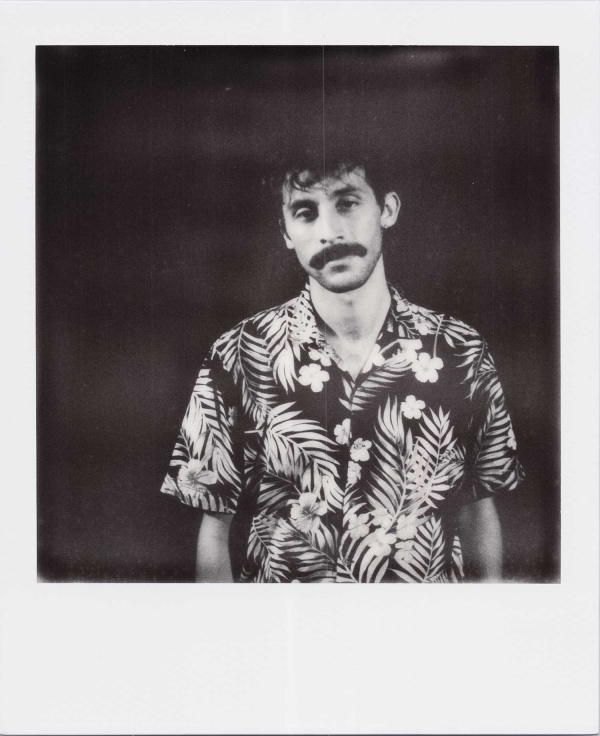
Abel Baeck
Abel Baeck obtained his master’s degree in music composition at the Royal Conservatoire of Antwerp. He specializes in creating electronic dance music across genres such as electro, garage, house, and techno. Baeck brings his electronic experiments together under the artist name NO LABEL. Since 2023, he has been closely collaborating with the SOCHA collective.

Alix Konadu
Alix Konadu is a performer, actress, and theatre maker of Belgian-Ghanaian descent based in Brussels. She works across television and film (Loslopend Wild, Familie, Binti) as well as on stage. Together with Ben Tanghe, she forms the collective Omelett, which tours with the children’s production Badkruipers. At Madam Fortuna, she directed 45 women in a production marking the 50th anniversary of the 1967 International Tribunal on Crimes Against Women. She is currently performing in Vier Muren by Marios Bellas and developing her first solo project. For this, she is in residence at Moussem Nomadic Arts Centre, previously spent three months at perfocraZe International Artist Residency in Kumasi (Ghana), and will continue her research at Alkantara in Lisbon. A recurring theme in her work is the exploration of physical and mental boundaries, particularly in relation to identity, displacement, and the search for connection.

Amina Iddrisu
From a young age, Amina Iddrisu has been fascinated by the stage. Through training in a wide range of styles from ballet to dancehall—and her background in gymnastics, she has developed a unique movement language inspired by various traditions and musical genres. She began her theatre career with roles in Snap XL and 8.2 at fABULEUS, and has since performed in several multidisciplinary art productions with companies such as Arsenaal, Socha, and KVS. Her curiosity and eagerness to learn constantly drive her to evolve and broaden her artistic palette. Today, Amina is taking her first steps as a creator with the production JOBO, which will premiere in January 2025.
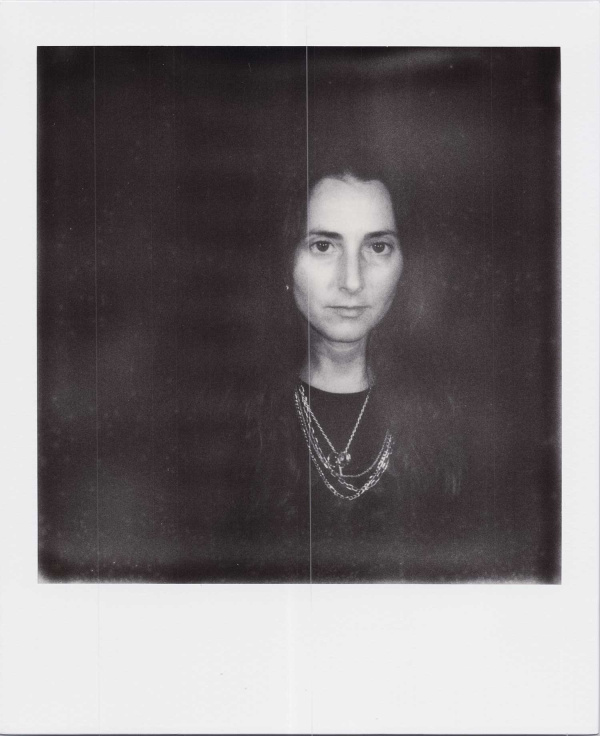
Aymará Parola
Aymará Parola was born in Argentina, where she trained in traditional Argentine folk dance, ballet, and contemporary dance. Since 2009, she has been based in Brussels and has collaborated with Ultima Vez / Wim Vandekeybus on several productions, including Oedipus / bêt noir (2011–2012), What’s the prediction?! (2012), Spiritual Unity (2013), What the Body Does Not Remember (2013–2015), Die Bakchen – lasst uns tanzen (2019), and Scattered Memories (2022). She has also worked with artists such as Ayelen Parolin (2017), music and theatre maker Ariah Lester (2019), and Alexander Vantournhout (2021). Since 2023, Aymará has been involved as performer and creator in the project NO/MAS/SACRE, in collaboration with Brazilian artist Reinaldo Ribeiro and pianist Lea Petra. The piece premiered in June 2024 at the performing arts festival FAM in Tenerife. In addition to her work in dance and performance, Aymará also explores the visual arts, photography, and film.

Bahar Temiz
Bahar Temiz is a dancer and choreographer whose work intrinsically revolves around scenography. Born in Istanbul, she later studied philosophy at the Sorbonne in Paris before pursuing dance training at ArtEZ Academy in the Netherlands. In 2009–2010, she took part in the Ex.e.r.ce training programme in Montpellier. As a performer, she has worked with the Superamas collective and choreographer Ivana Müller. In 2018, Marc Vanrunxt created the solo White on White for her. Bahar is a certified contemporary dance teacher in France and holds a master’s degree in dance from the University of Paris VIII. Her choreographic work is marked by a strong visual language and a transdisciplinary approach, drawing inspiration from visual arts, literature, philosophy, and history. She is part of the KVS faces and is currently working on the trilogy ICE-PUNKT-CONCRETE / BÉTON.

Dora Almeleh
Dora Almeleh was born in Brussels and moved to Israel at the age of 18, where she joined the International Dance Journey Program at KCDC with a scholarship from MASA. In 2020, she completed the Maslool Professional Dance Program in Tel Aviv and began dancing with Ballet Junior de Genève. During her studies, she had the opportunity to perform and tour in works by internationally acclaimed choreographers such as Marcos Morau, Sharon Eyal, Jan Martens, Roy Assaf, Noa Zuk, and Barak Marshall. She also collaborated with Roni Chadash on the creation process of the solo Tribute to the Same Sea. As part of the SUD.LAB.PRO ensemble, she worked with Adrienn Hód (HODWORKS), Jenna Jalonen, Manuel Ronda, and Csaba Molnár. Since 2023, Brussels has been her home base, where she collaborates with artists including Mercedes Dassy, Jenna Jalonen, and Isabella Soupart.

Elke Gijsemans
Elke Gijsemans is a visual artist with over thirty years of experience as a graphic designer. She often combines painting with graphic art in her work. She has collaborated with theaters such as Arsenaal and Hetpaleis and is a resident artist/designer with the SOCHA collective. For SOCHA, she has participated in live performances such as On Fire 1, Burning City, and Socha Light. Additionally, she is working on an installation inspired by a spinning wheel with golden thread, in which the Kogi community fights for the climate. In her photo series Très Chic, she captures gum in the urban landscape. In November 2024, she will explore and present the theme of the birth of women, along with Alix Konadu and Nina Plantefève-Castryck, in a new SOCHA performance at Arsenaal.

Emma Posman
Emma Posman is a Belgian soprano. She graduated with the highest honors from the Royal Conservatory in Ghent and was selected as an MMLaureate in the Mmacademy of La Monnaie. In 2022, she became a member of Equilibrium, a Young Artist program founded by Barbara Hannigan.Emma began her career as the Queen of the Night at the Salzburg Festival as a substitute. After this successful experience, she performed the role in several renowned German and French opera houses. She later sang with the Scottish Chamber Orchestra and in productions of De Munt and Opera Ballet Vlaanderen. In the KVS production L’homme de la Mancha, she performed as the Governess. She has also been featured in world premieres, including roles as Frieda and Grete in Brice Pauset’s opera Châtiments, in Benjamien Lycke’s musical theater production Flandria, and in Lucien Posman’s Cantata Songs of Innocence. In the 2023-2024 season, she will sing the role of La Hija in the chamber opera Cambia madre por moto by composer Frank Nuyts and make her role debut in a new production of Gianni Schicchi and Die Lustige Witwe as Valencienne.

Gala Dragot
Gala Dragot won the Flemish edition of The Voice Kids in 2020, gaining immediate attention. The catchy single she released afterward received significant airplay and attention. At the time, Gala was still using her artist name, but she later adopted the stage name of her father, Robert Aliaj Dragot, one of the most prominent figures in Albanian showbiz and a contemporary artist. She says of the name: “Dragot sounds cool in every language. In French, we say that word has ‘gueule,’ it has its own style.” In 2023, she released the song t’inquiète, which she also used to participate in the Belgian preselection for Eurosong 2023. Additionally, she acts in the film COME BACK by Jan and Raf Roosens, starring alongside Veerle Baetens and Zwangere Guy. In 2023 and 2024, she collaborated with The Subs on a remix of Massive Attack’s Teardrop, performing it live at various locations and festivals. She is also currently working on her own music.
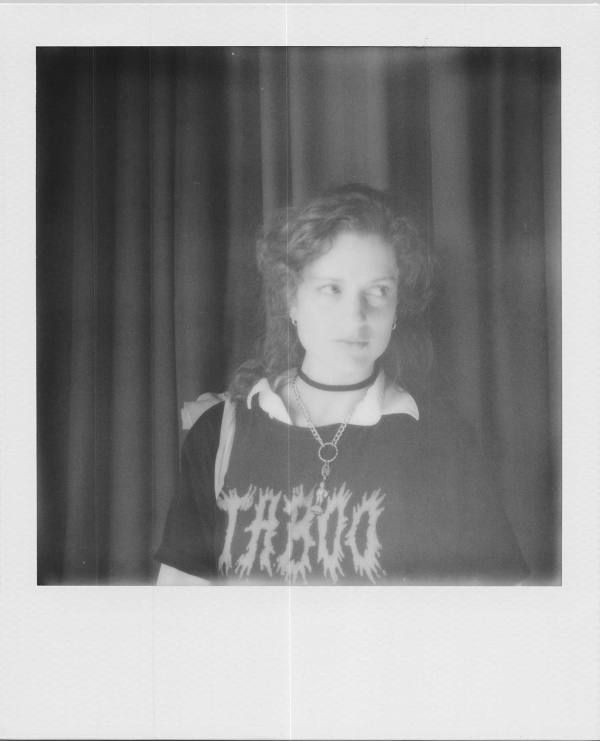
Justine Bourgeus
Justine Bourgeus is an artist, musician, producer, multi-instrumentalist, composer, and singer-songwriter. Inspired by dance music and baroque music, she has released three EPs and two LPs. Bourgeus' music is highly popular within the dance world, and she is a sought-after composer and producer. In 2023, she received the Soundtrack of the Year award from Humo for the documentary series Godvergeten.

Jutta Troch
Jutta Troch is a freelance musician who plays both the baroque harp and contemporary concert harp. After studying classical harp at the Conservatory of Antwerp and contemporary chamber music at the Conservatory of Ghent, she gradually shifted her focus from classical performer to versatile musician within various music genres. This includes both music productions and music theater performances where there is room for improvisation, personal arrangements, and composition. She tours nationally and internationally with Theater De Spiegel, performing various children's shows. Additionally, she contributes to concerts, CD recordings, and music theater productions with companies such as hetPaleis, Muziektheater LOD, Hof van Eden, Marthatentatief, Ratas Del Viejo Mundo, Zefiro Torna, In Alto, Ictus, Zwerm, Tuning People, Nadar Ensemble, ChampdAction, Spectra Ensemble, and Baroque Orchestration X, collaborating with artists like Efterklang, Dez Mona, Spinvis, and An Pierlé.

Marios Bellas
Marios Bellas is a performer, rapper, and director. After his directing studies at RITCS, he performs in EXTREME / MALECANE (Paola Pisciottano / Théâtre National), MARS, and SEGEN (both Youyougroep / Myriam Van Imschoot). In 2022, he joined the multidisciplinary collective SOCHA, contributing to the #ON FIRE series. As a rapper, he releases Brussel and Fuck de bureaucraten at the end of 2023, with distinctive, energetic performances, fiery social engagement, and an unmistakable sound. He is currently working on his debut album, Honger. In his directorial debut, Vier Muren, he combines his fascinations with trance states, hip hop, collectivity, and fiery activism in an impressive hip hop ritual.

Mirko Banovic
Composer and musician Mirko Banovic studied jazz bass at the conservatory in Ghent. He has played and recorded with artists such as Arno, Arsenal, Zita Swoon, An Pierlé, Sioen, Meuris, Jane Birkin, Olla Vogola, Axelle Red, Julien Doré, Adamo, Arid, PJDS, Marie Warnant, Anton Walgrave, DEUS, and many others. Banovic composed music for the theater productions de drumleraar and Soeur Sourire. He also performed on stage in R.I.S.A., the latest Jr.cE.sA.r creation at KVS. He has played with bands like Arno, Tjens Matic, Arsenal, PJDS, FES - Boggamasta, Wicona Airbag, P4P, S.w.a.n., Moondog Project, and Modderhed. He also teaches at PXL-music in Hasselt.

Raphaële Green
After studying political science, Raphaële Green chose to pursue classical singing and lyrical arts in Namur. She then moved to the U.S. to study with Marilyn Mims. In 2019-2020, she became a member of the Young Soloists Ensemble of Opera Ballet Vlaanderen. This natural talent on stage has been invited to perform worldwide. In recent seasons, she has performed with Opera Ballet Vlaanderen, La Monnaie, OperaZuid, KVS, Grand Théâtre de Luxembourg, Châtelet, Festspielhaus St. Pölten, and Dutch Opera Ballet. She enjoys blending her operatic voice with other music genres, as seen in her performance at the opening concert of the Soul Power Kongo Festival or her collaboration with slam poet Joëlle Sambi and DJ Sara Machine. Her repertoire includes roles such as Carmen (Bizet), Dryade (Ariadne auf Naxos), Dorabella (Così fan tutte), and more. She has worked with conductors such as Alain Altinoglu, Markus Stenz, Alejo Pérez, and directors like Ivo van Hove and Olivier Py.
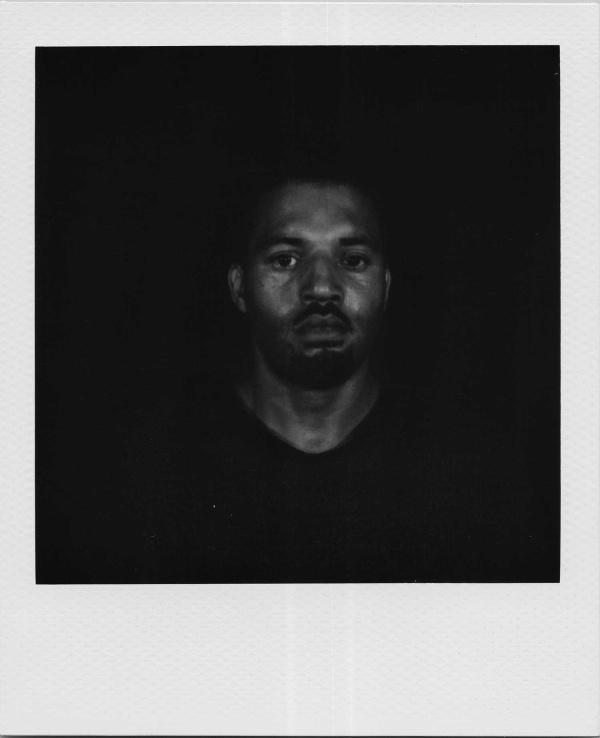
Yannick “Tonic Mendi” Jacobs (Mechelen) is a rapper and actor, known for his versatility and passion for the arts. As a rapper, he stands out with his sharp lyrics and powerful performances that explore profound personal and societal themes. His music resonates with a wide audience, delivering authentic stories in a unique and impactful way. In addition to his music, Tonic Mendi is also building an acting career, with notable performances in SOCHA productions among his credits.

Pierre Anganda


Ibrahima Cissoko
Credits
direction JUNIOR MTHOMBENI & MICHAEL DE COCK dramaturgy GERARDO SALINAS
musical dramaturgy TOM SWAAK with VIANNEY ADRIAENS, KIREZI KALISA, DORA ALMELEH, MOHA AMAZIAN, PIERRE ANGANDA, ABEL BAECK, MARIOS BELLAS, JUSTINE BOURGEUS, IBRAHIMA CISSOKO, GALA DRAGOT, RAPHAËLE GREEN, AMINA IDDRISU, TONIC MENDI JACOBS, TOM KESTENS, ALIX KONADU, AYMARÁ PAROLA, EMMA POSMAN, ZACH SWAGGA, BAHAR TEMIZ, JUTTA TROCH scenography STEF STESSEL lighting design DIMI STUYVEN costume design MARIE SZERSNOVICZ video design FRANCESC ISERN painting ELKE GIJSEMANS production management CATHERINE VERVAECKE & ROBIN HECTORS stage manager CAROLINE WAGNER sound BRAM MORIAU lighting DIMI STUYVEN video THIBAUD DECOENE subtitles INGE FLORÉ costume workshop THEATRE DE LIEGE, CiLAB production KVS coproduction OPERA BALLET VLAANDEREN, DE MUNT / LA MONNAIE, THEATRE DE LIEGE, TNC, COMPAGNIE DU THEATRE NATIONAL DANIEL SORANO, MADAME FORTUNA, PERPODIUM with special thanks to THEATER ARSENAAL with the support of THE BELGIAN FEDERAL GOVERNMENT VIA CRONOS INVEST, THE EUROPEAN UNION (HORIZON 2020 PROGRAMME)