


Hear the Silence
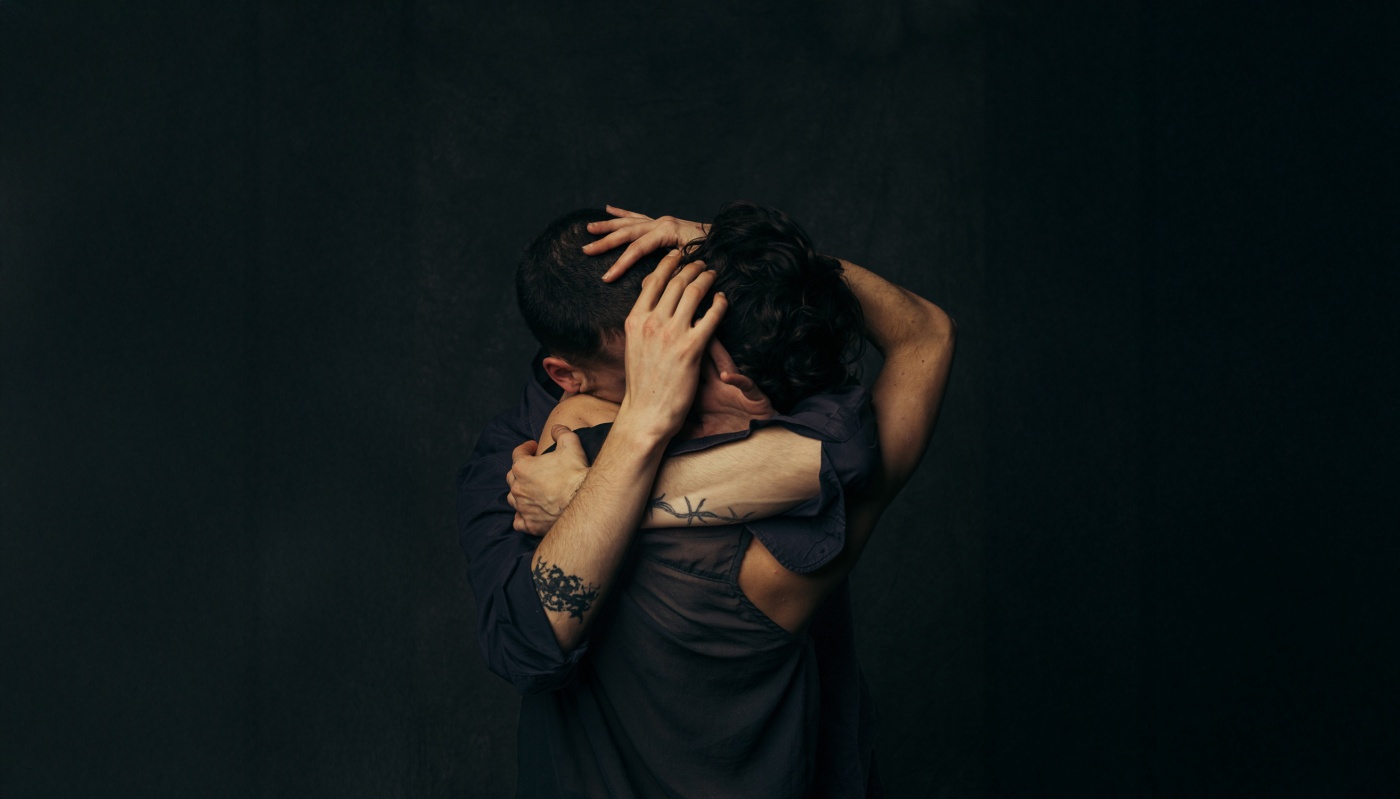
“The silence is the zero point where the end of deconstruction and the beginning of reconstruction meet.”
Hear the Silence explores the need for embrace in times of disruption.
Its point of departure is the waltz, once a musical and choreographic symbol of European refinement, yet shaken in the twentieth century by underlying tensions. Seven dancers and one musician re-examine the waltz and break open its form. In search of collective resilience through rebuilding with fragments of the past, new compositions emerge, drawing parallels with the present.
Hear the Silence is a contemporary plea for dance and music as forms of resistance and connection in unstable times.
ABOUT THE WALTZ
A central motif in the performance is the waltz – both in movement and in sound – which over the years became a symbol of prosperous nineteenth-century Europe. The earliest forms of the waltz appeared in the sixteenth century, evolving from folk dances in southern Germany and Austria, later known as Länder and Walzer. These partner dances were characterised by a triple metre (¾) and spinning movements performed at such speed that dancers had to hold their partners close.
Initially regarded as vulgar, the waltzing folk dances nevertheless attracted the interest of the social elite in the eighteenth century, who had grown weary of the aristocratic minuet. To the shock of some, the waltz gained popularity and entered European courts. It evolved from a freer folk dance into an iconic ballroom dance embodying precision and elegance. Many major composers wrote waltzes, including Schubert, Chopin, Strauss and Ravel.
The dance reached its peak in the nineteenth century, first in Vienna and then across Europe. Its decline followed the outbreak of the First World War, with the fall of the Austro-Hungarian monarchy and, along with it, Viennese high culture.
The brutality of war undermined the credibility of the European elite, who had used the waltz to sustain a romantic image of wealth and pleasure. Significantly, Maurice Ravel composed La Valse (1920) between the two World Wars, allowing the music to disintegrate into fractured fragments as a critical reflection on an elite blind to the horrors of war. The decline of the waltz opened the way for new popular dance styles, including the foxtrot, introduced to Europe from the United States after World War I.
ABOUT THE MUSIC
As a musical leitmotif, the performance uses a recording of Maurice Ravel’s La Valse. The idea for the composition originated in 1906 and was initially conceived as a choreographic poem and homage to Johann Strauss, commissioned by Russian ballet impresario Serge Diaghilev. However, the dehumanising experiences of war changed the work’s intention, and Ravel ultimately composed a “fatalistic” waltz.
The composition can be divided into three sections: the birth of the waltz, the floating dance couples in the ballroom, and a grand climax followed by total collapse. Ravel wrote: “I see this work as a kind of apotheosis of the Viennese waltz, which in my mind blends with the idea of the fantastic whirling of fate.”
Although Diaghilev acknowledged it as a masterpiece, he did not consider it suitable as a ballet and reportedly refused to stage it with the Ballets Russes. This led to a conflict between the two men, and the ballet eventually premiered in 1926 at the Royal Ballet of Flanders.
Despite Ravel’s objections, La Valse is often interpreted as a metaphor for the irreparable damage war inflicted on Europe. Beneath the refinement of the musical waltz lies the threat of conflict, rising fascism, militarisation, technological acceleration and social tensions – dynamics that resonate strongly with today.
In Hear the Silence, the waltz is deconstructed on structural, rhythmic and melodic levels and given a contemporary resonance. Sound and music are physically present on stage in the form of a sound installation designed by sound designers Rint Mennes and Willem Lenaerts in collaboration with dancer Misha Demoustier.
The sound designer and performers share the stage and engage in a live dialogue. Fragments of La Valse are transformed into rhythmic beats, and a continuous cycle of construction, dismantling and reconstruction generates new compositions that resonate with the present.
The performance searches for an all-encompassing, sometimes destructive form of sound – but also for its counterpart: silence. A sound that suddenly falls away can feel threatening, alienating or liberating. Ultimately, it can create space for silence.
ABOUT THE DANCE
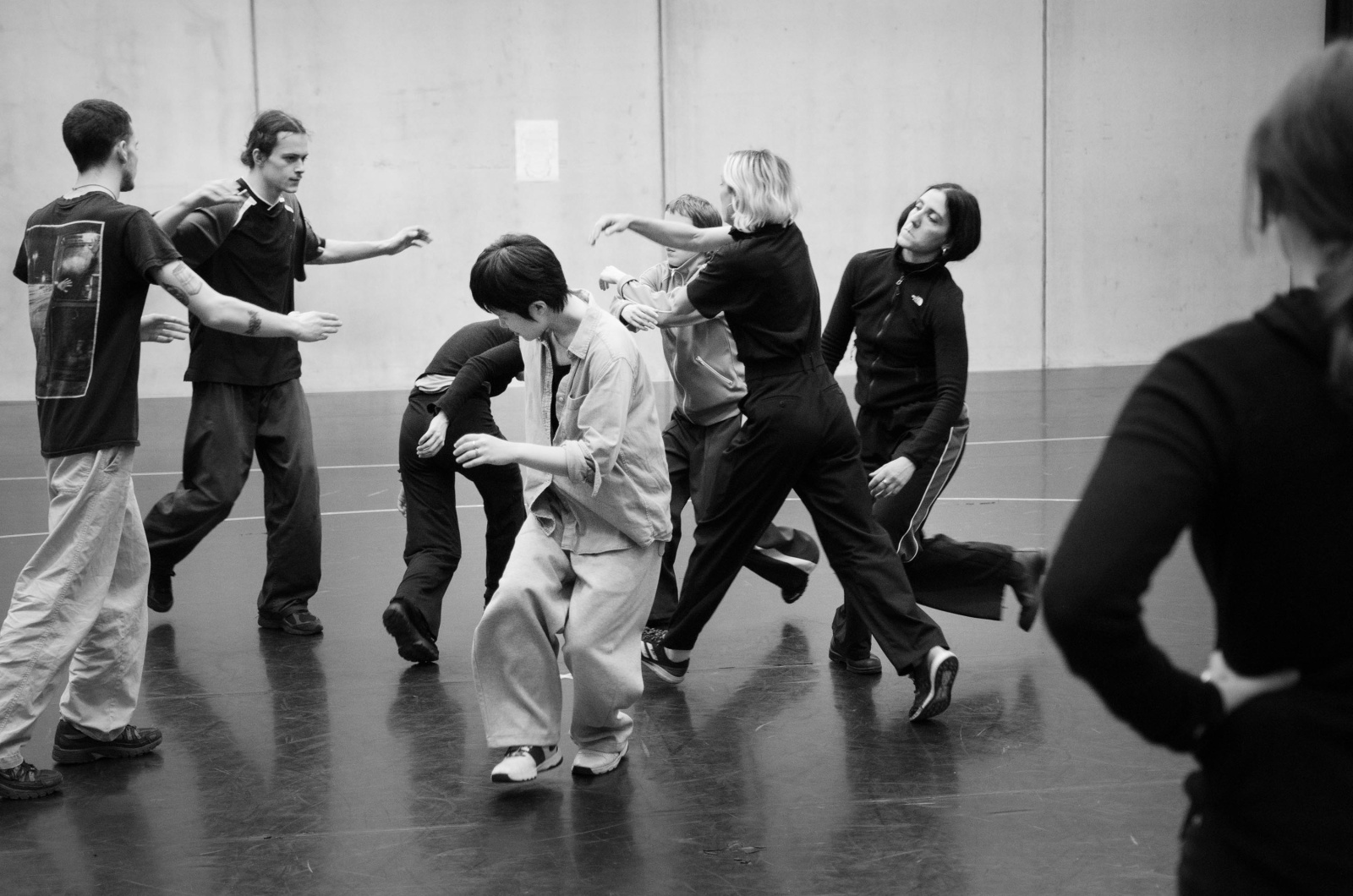
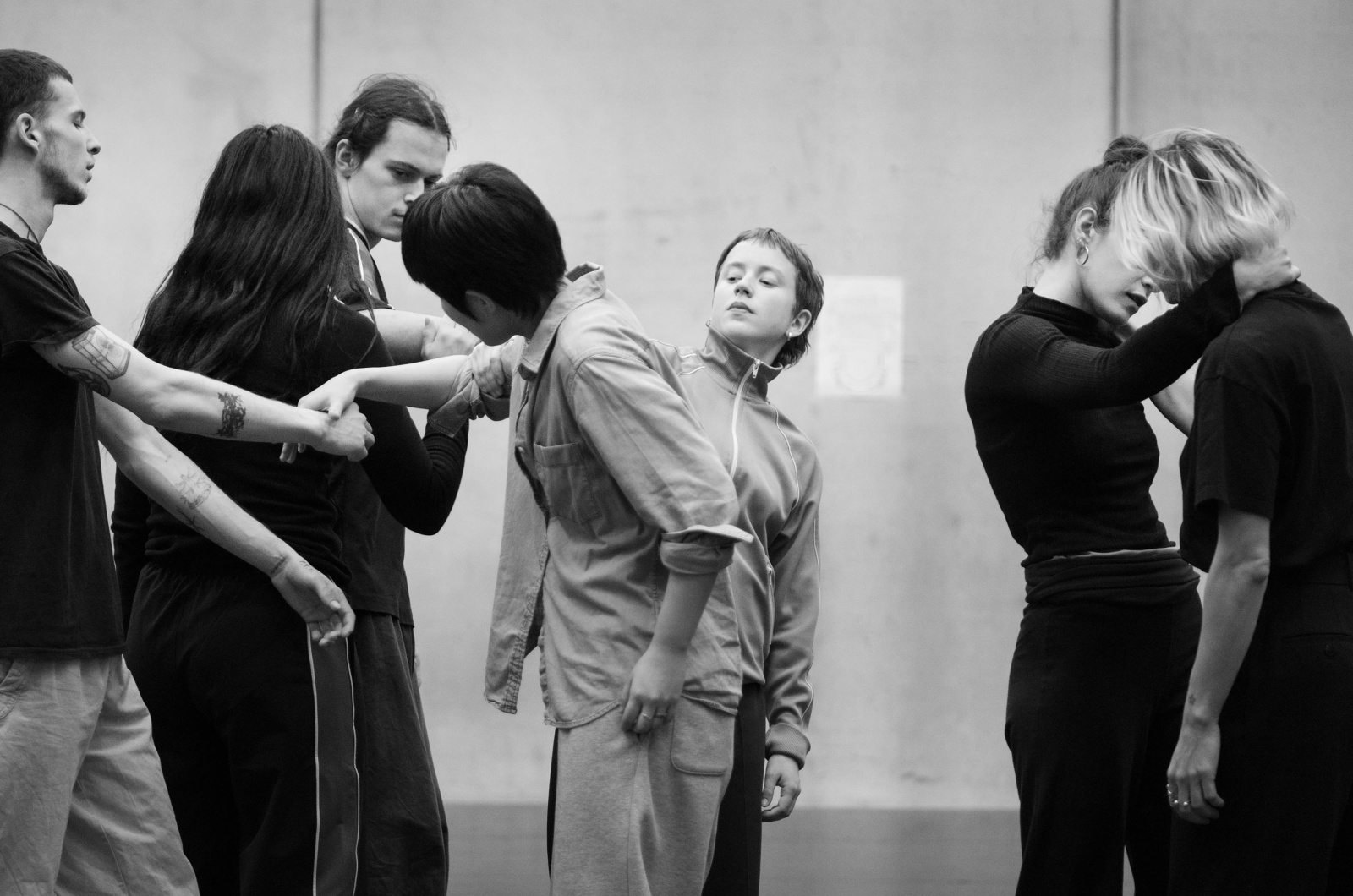
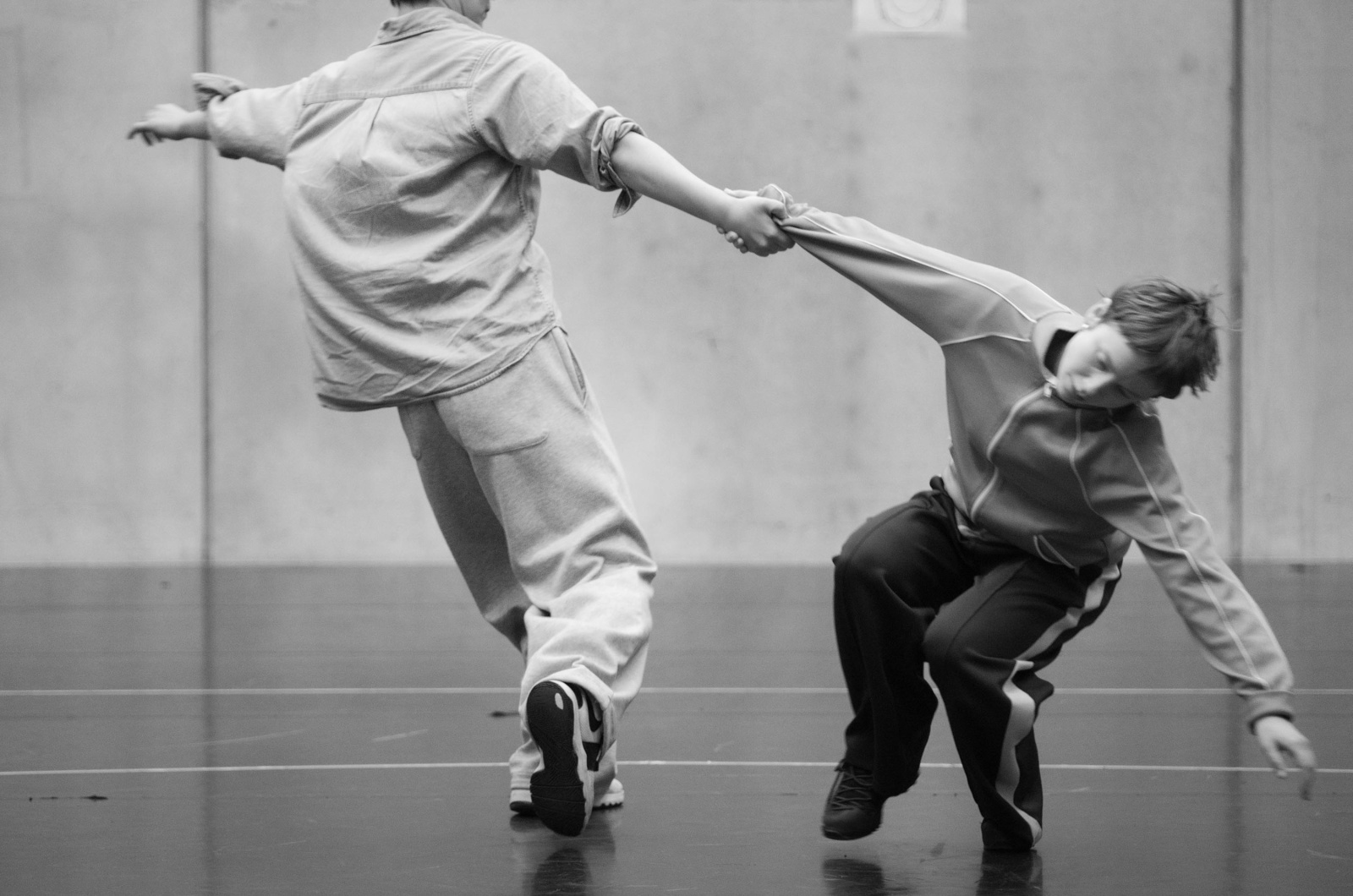
The choreography focuses on deconstructing traditional waltzes and the folk dances from which they originated. These serve as the starting point for a choreographic exploration of positions, postures and floor patterns. Original dance structures are pulled apart and then reassembled into new creations.
As in La Valse, shifting metres and rhythmic variations destabilise the structure, causing both dance and music to fragment and fall apart. Repetitive waltz steps intertwine with the strict formations of military marches and the free, expressive movements of contemporary club dance. The waltz thus becomes a metaphor for the urge to keep going.
An underlying question remains: can one still dance in times of conflict? Theatre maker Bertolt Brecht offered an answer last century:
“Will there be singing in the darkness? Yes, there will be singing about the darkness.”
Today we see nightclubs flourishing, even in besieged cities and conflict zones such as Kyiv and Beirut, where vibrant underground scenes continue to thrive. In times of increasing threat, the resurgence of the far right and palpable polarisation, people seek ways to come together.
Dance dramaturg Rudi Laermans writes in Gedeelde Angsten [Shared Fears] that fear weakens freedom and that solidarity, in turn, counters fear. One does not dispel fear alone.
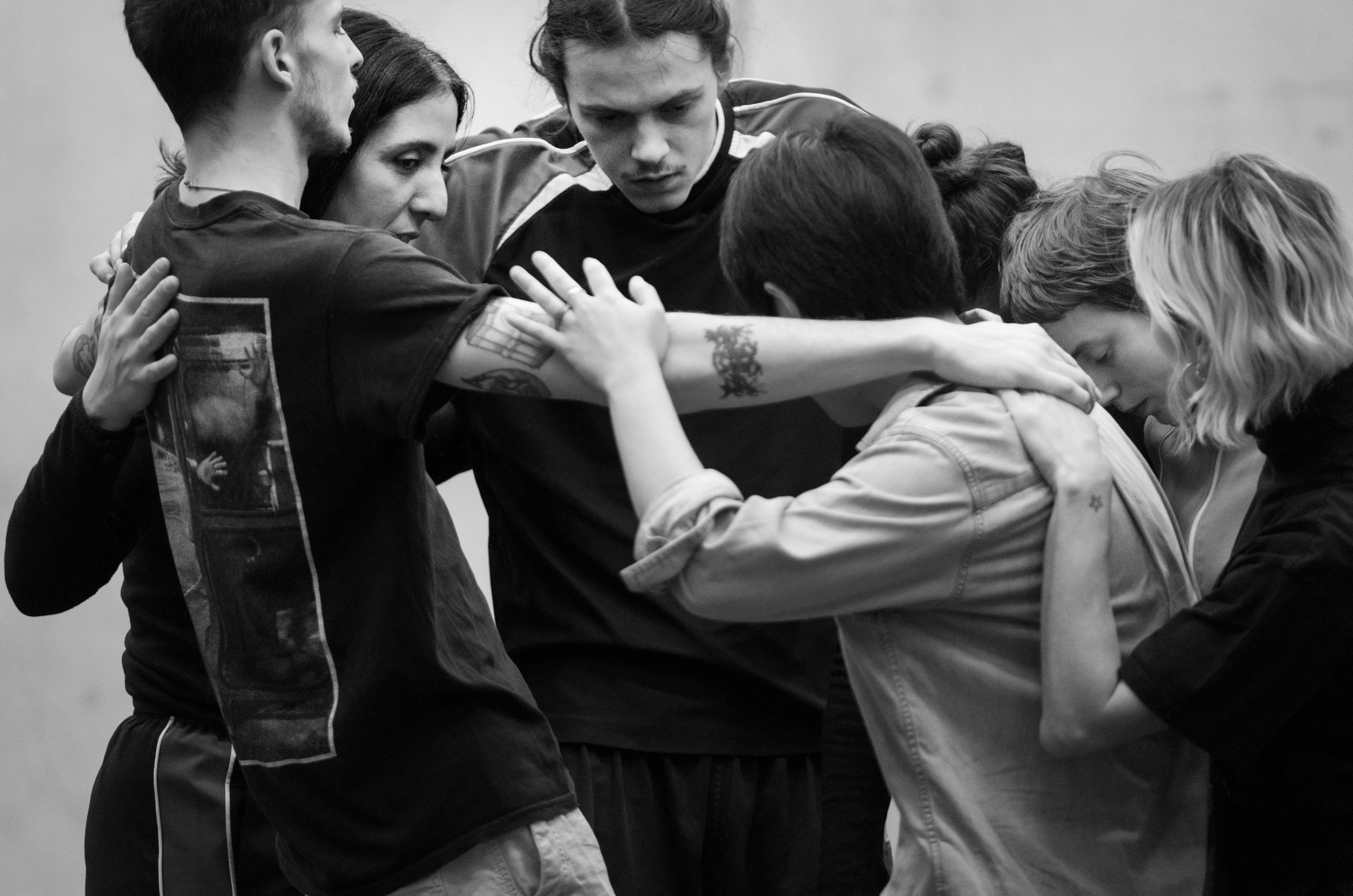
The performance portrays a group of individuals reconnecting, reaching toward one another and, through attempts at rebuilding, rediscovering (physical) closeness. Connection as comfort and as an act of resistance.
In this sense, Hear the Silence is a choreographic and musical search for resilience and hope.