


With Bovary and Anna Karenina, Carme Portaceli introduces two literary powerhouses. Two women tormented by the chains of love and society. Olivier Frégaville-Gratian d’Amore asked her about the motivations behind these two productions.
You present two major female figures: Emma Bovary and Anna Karenina…
Carme Portaceli: They each tell, in their own way, what it means to be a woman in a society that does not recognize you. I’m a woman, and like many others, I have experienced discrimination. These two heroines are powerful, complex, tragic. They’re not just victims of a system, they are also the voices of a longing for freedom, emancipation, and absolute love. They don’t just live through dramas; they live a true human tragedy.
What does Emma Bovary mean to you?
Carme Portaceli: She is a brilliant woman, but deeply unhappy. She marries the doctor who heals her father, thinking that this is love and that she can leave home to care for her father. She believes he will save her from boredom, but once she is alone with him, she realizes it’s just a cloud of smoke invented by society. Love will not be there; marriage won’t set her free—on the contrary, it imprisons her until she loses her mind. She tries to save herself through love, seeking that mad love from her lovers, because that’s what most resembles the romantic novels she devours to stay afloat. She’s trapped in a dead-end life pattern and ends up destroying herself. Yes, she commits suicide, but society is what killed her.
And Anna Karenina, whose journey has some similarities?
Carme Portaceli: Their destinies are quite similar and yet very different. Tolstoy read Flaubert. He was inspired by him. The last words of both heroines are even identical. But unlike Emma—and this is very Russian—Anna truly loves. Vronsky is not a whim. She is viscerally attached to him, but must choose between him and her son. That is what tears her apart. “I have nothing but you, from now on,” she tells Vronsky. And society does not forgive her. It excludes her, rejects her, drives her to despair. Again, it’s the impossibility of fully existing that leads to death.
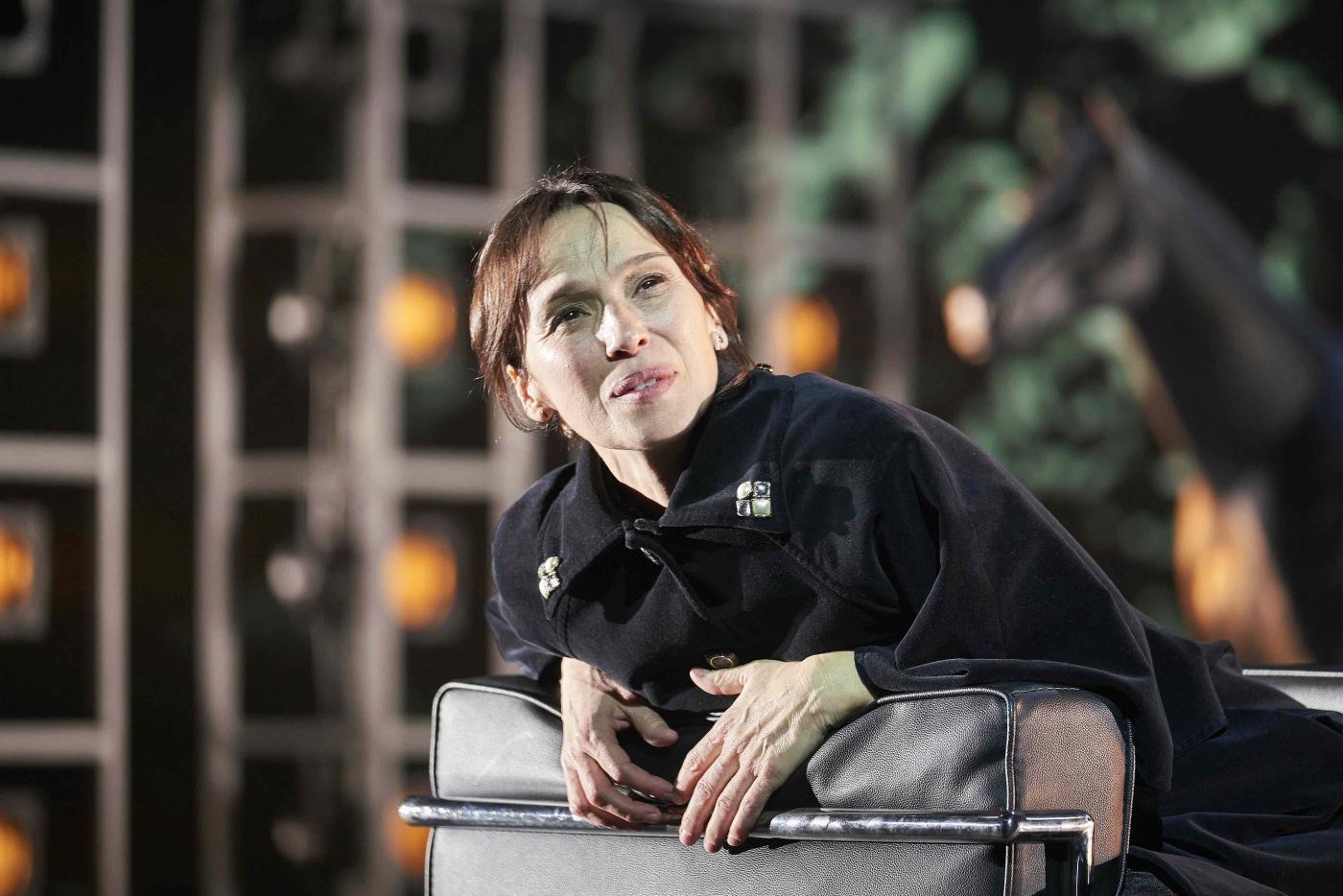
These tragedies are surprisingly modern...
Carme Portaceli: Absolutely. We think everything has changed, but no. Even today, a woman who wants to divorce doesn’t always have the freedom to leave. There is pressure, threats, judgment. And sometimes, they are murdered. The weight of the social gaze is still there. And when a woman is raped or assaulted, her clothing, gestures, and attitude are still scrutinized. We still look for the “ideal” victim—and it’s always the one who is dead. It’s unbearable. I wanted to show that by adapting two 19th-century novels.
How did you convey this in your staging?
Carme Portaceli: For Bovary, I wanted to erase the lovers. They are absent. They have no faces. They don’t matter; what matters is the relationship with Charles. He loves her. But he understands nothing. And that is the tragedy: he is there, loving—and yet, he is an obstacle, a wall. For Emma, that is hell. The entire story hinges on that lack of understanding.
These are our sisters, our mothers, our friends. What Emma and Anna go through is still what many women experience today.
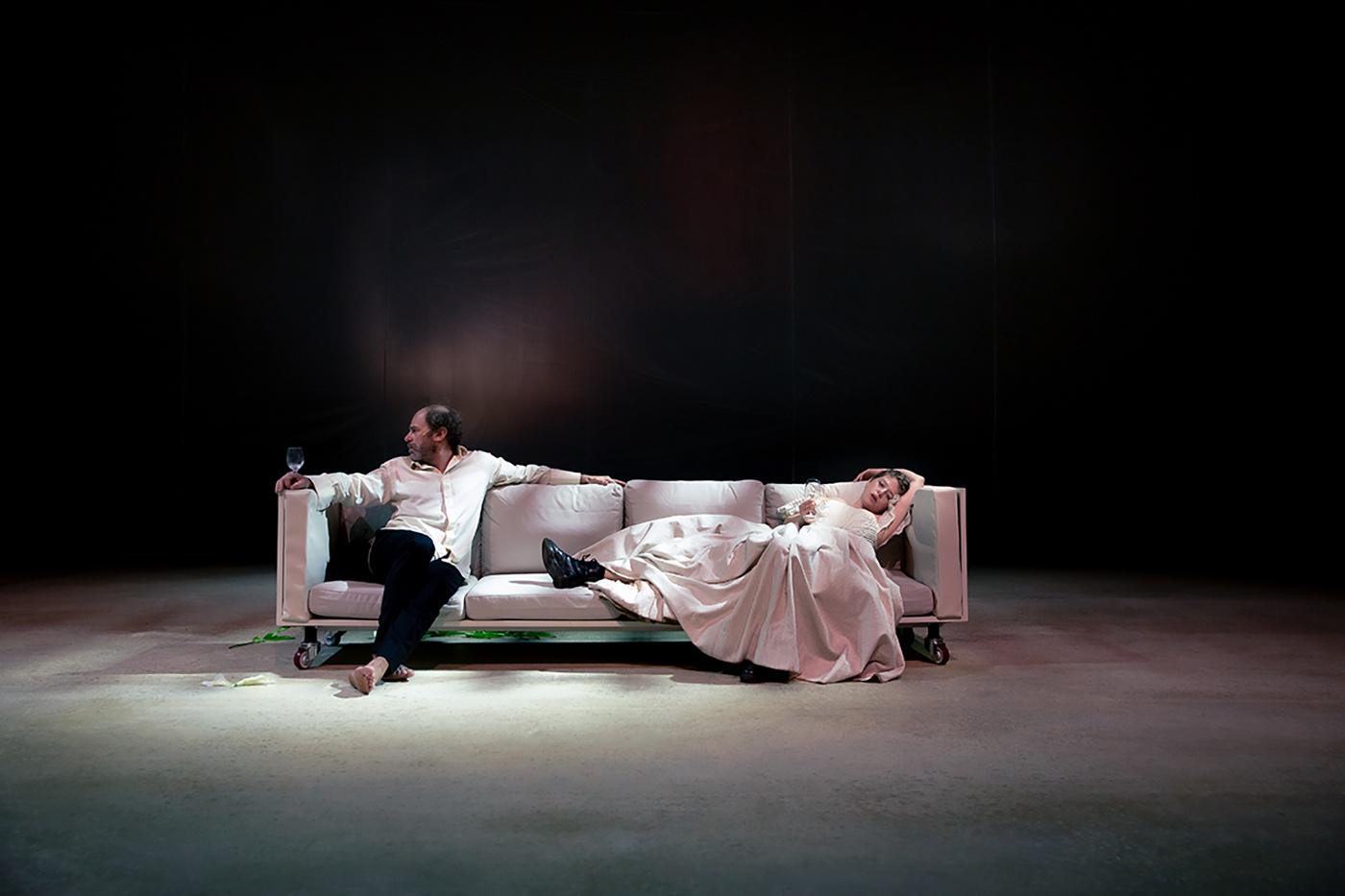
And for Anna Karenina?
Carme Portaceli: For her, it’s mad love. But also abandonment. Vronsky, too, ends up no longer being there. It’s the story of a solitary struggle, of a woman who refuses to hide her love, who wants to live it openly. She doesn’t understand why she should live in shame.
Your adaptations are contemporary. Why this choice?
Carme Portaceli: I don’t place these stories in the past. They float in a suspended time. They are there so we can recognize ourselves in them, regardless of the era.
You worked with two different troupes: Flemish for Bovary, Catalan for Anna Karenina. Two distinct experiences?
Carme Portaceli: A bit, but the method remains the same. I have a visceral need to feel the stage, to explain to the actors how I see things. It surprised them, because they’re not used to directors being present on stage. It’s not common in their theater culture. I work immersed, I feel the stage. I need that physical connection to create.
What do these two plays say to you?
Carme Portaceli: That these are not ancient tragedies. These are our sisters, our mothers, our friends. What Emma and Anna go through is still what many women experience today. But above all, their voices must finally be heard. And we must reclaim the narrative, which never belonged to women. Without a story, there is no power.
Excerpts from an interview conducted by Olivier Frégaville-Gratian d’Amore for L’œil d’Olivier, April 2025.