


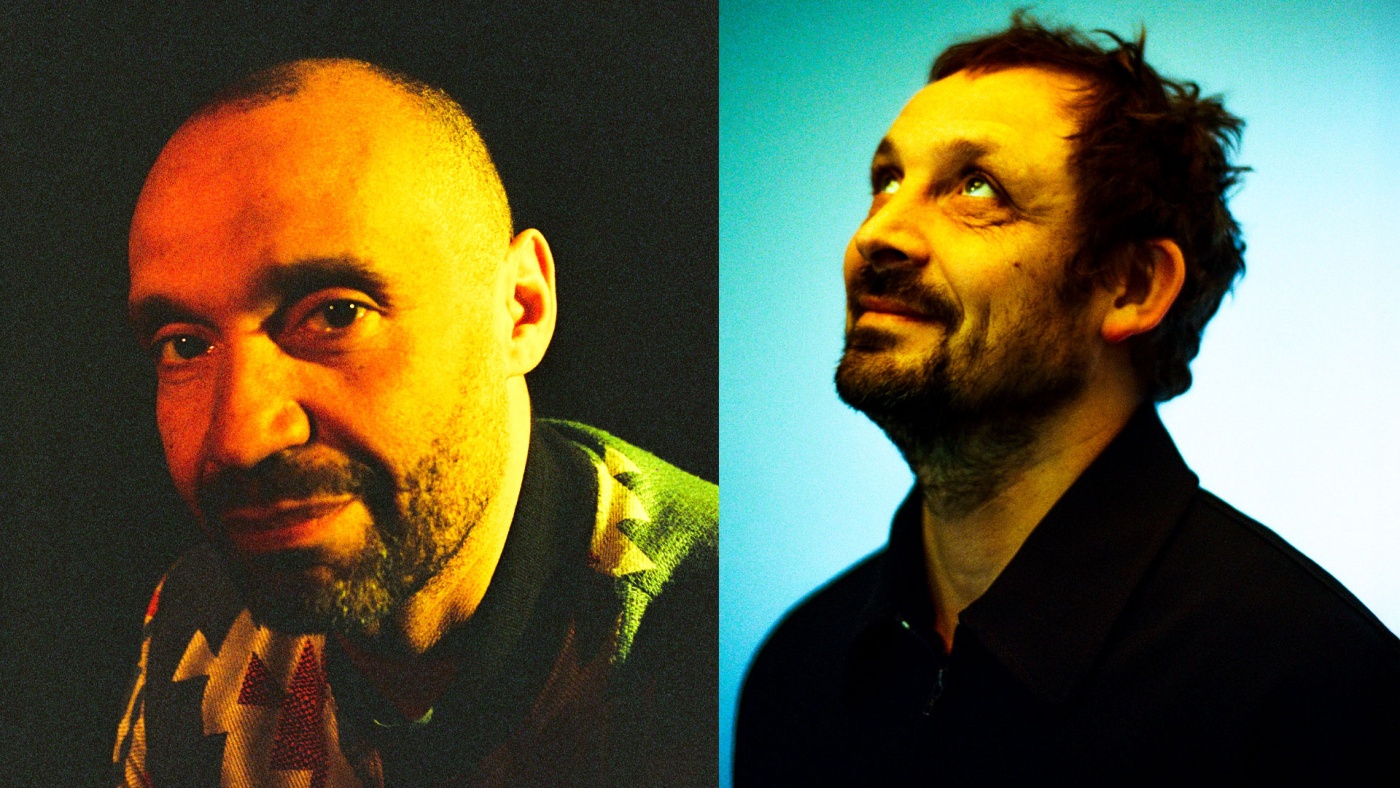
Participation, diversity, representation: terms that are often used as proof of an inclusive and measurable cultural landscape. But what do they mean outside of policy papers and subsidy applications? For choreographer Seppe Baeyens and theatre creator Junior Mthombeni, these concepts are not frameworks, but practices. At the inception of their new creations for spring of 2027, they sit down for a conversation and share their experiences in a joint moment of reflection.
For Die Before You Die, Mthombeni travelled to Varanasi in India, a city where life and death constantly meet. “Varanasi is a place where people go to die, and not in a negative sense. That attracted me,” he says. In the performance, he lets go of the last name Mthombeni, a name that was imposed on his family by the South African Apartheid regime. His real last name Moloi, linked to spiritual healers, becomes a symbol of recovery and resistance. The death of an old form makes space for something new.
Baeyens works with a different form of collectivism: the museum. Kosmos, a creation specifically for museum spaces, is being developed in collaboration with KANAL-Centre Pompidou, the Brussels art centre reopening at the end of 2026. After years of working within the theatre and in the public space, Baeyens now investigates how other institutional contexts function as places of gathering, and under which conditions these gatherings can take place.
Collectivism and ritual
In Kosmos, Baeyens investigates how dance can create a new relation to visual arts, and how the museum can be rediscovered as a space for connection. The central question: how do we relate to art, and how are we perceived? When dance moves between objects, bodies, and visitors, a shared space for encounter arises.
But what is the meaning of such an encounter? And when does it become ritualistic? For Baeyens, it’s not a case of form or terminology. “The ritual is a very broad concept,” he says. “For me, it’s less about a set framework and more about research.” His questions are fundamental and spatial: who is a museum for, who can move inside it, and under which conditions? The museum is not an obvious public space, but an institute that can be researched through gathering.
For Mthombeni, these questions about presence and responsibility arise in a different context: not an institutional one, but the culturally and historically loaded landscape he works in. “I am careful not to exoticise, especially when I work in local contexts like South Africa or India. There’s a duality: these places have a strong attraction for me, but I don’t want to simply approach them from a western logic. It’s exactly this tension which is interesting to explore.”
Participation and practice
Participation is central to their work, but not in the way we often think about it. For Baeyens, it’s not an addition, but the starting point. Kosmos will include an exhibition, in which he wants to confront the museum visitor with unexpected moments and encounters across their museum visit. Diverse groups move through a modular system: “At the end, they all come together. A sort of apotheosis arises, where all the different modules and ideas meet.”
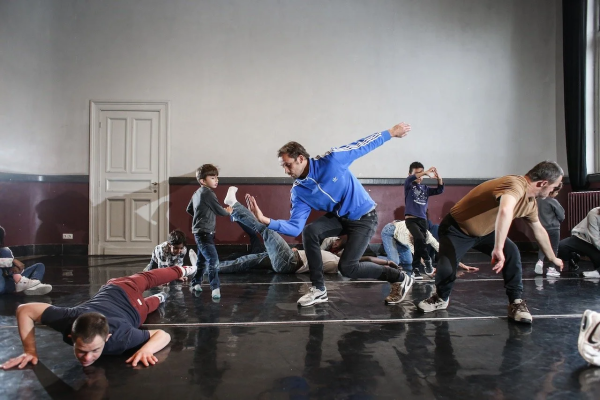
This way of working is process-oriented and inclusive: Baeyens involves various groups and works with organisations like LEON, a nomadic workplace that uses dance as a means for connection. The expertise of these partners is joined with that of KVS and KANAL, not to smoothen everything out, but to investigate how knowledge and experience can enhance each other.
Not only the audience and the cast are mixed: new collaborations are also sought at the organisational level. For Baeyens, this is also a personal quest: “I live in Molenbeek and I don’t see much of my neighbourhood reflected in museums or theatres. That isn’t right.”
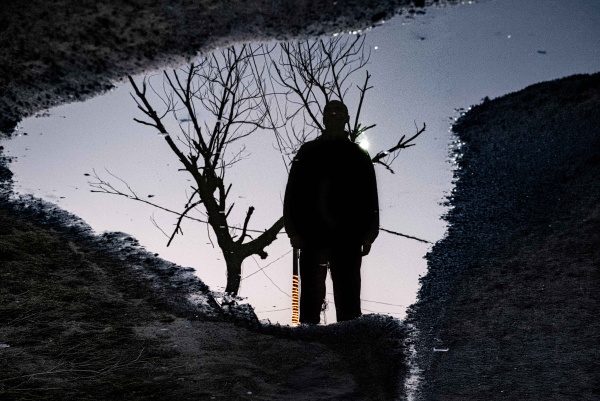
While Baeyens opens up spaces to the outside, Mthombeni makes an inner journey in Die Before You Die. “I often create larger-scale performances, but this one is about turning inwards. Thinking smaller, not less, but differently.” At the same time, he looks for moments when the audience can find a new relation to his creation, a ritual of shared experience.
“I don’t yet know what that will look like,” he admits – but this not-knowing is exactly what creates space.
The term ‘participative arts’ is often used for social-artistic work, as if it’s a separate category. For Baeyens, that differentiation feels wrong. “Involvement should be the basis of every artwork,” he says. “What happens when people who usually have a hard time accessing theatre or dance do get involved, is incredibly valuable. It’s difficult to measure, but the impact is real.”
“Involvement should be the basis of every artwork.” – Seppe Baeyens
For Mthombeni, participation is inextricably connected to who he is. “I’m not from a theatre background,” he explains. “When I started out, the theatre world felt incredibly white and enclosed – not a place where I simply belonged. The people I work with, and have always worked with, are simply talented, but they are not from the regular art world. The point is to make their stories resonate.”
Baeyens and Mthombeni notice that structural inequality still limits opportunities. Those at the top get to decide who gets visibility. “Sometimes I hear people suggest that you need to belong to certain minority groups to get opportunities today. That’s nonsense,” says Mthombeni. “When you look at the programmes of cultural centres, they are still hardly diverse. There’s more movement in urban centres, but it’s not about adding one creator from a different background to the programme every now and then. The story of the organisation itself needs to change.”
Brussels as fertile ground
Brussels’ urban context empowers that approach, says Baeyens. “The wealth of creators, stages and initiatives makes Brussels a fertile place. It’s rare to find such a concentration of talent and activity.” Mthombeni adds: “Brussels still has a high degree of rock ‘n’ roll. You can experiment here, a little more than in Flanders.”
“Brussels still has a high degree of rock ‘n’ roll. You can experiment here, a little more than in Flanders.” – Junior Mthombeni
Four years ago, the two Brussels creators worked together at a KVS summer school, and they immediately bonded. “We worked together with ease,” says Baeyens. “I could feel a good connection.” If they were to create something together, it seems like a natural match. “Honestly? I think it would be great. Seppe is someone who gives a lot, I feel,” says Mthombeni. “I work very horizontally, so co-creations are always of interest to me: sharing expertise and responsibilities. In that sense, I love Junior’s approach,” Baeyens adds.
Finally, one insight remains: the label ‘participative’ should never function as a reduction or a hierarchical label that makes work less valuable. It’s not a niche or a label that sequesters work to a separate category. It’s an approach: a way to be present and to share space, past pigeonholes and terminology, where shared experience, reciprocity and structural change are essential.
Interview by Aïcha Mouhamou